
DIY Vacuum Robot Oomwoo: Open-Source Innovation
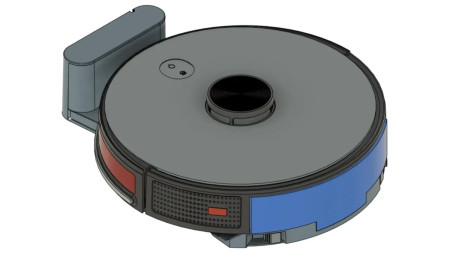
The DIY Vacuum Robot Oomwoo uses LiDAR and ROS 2 for offline control. The project demonstrates the possibilities of open-source hardware.
A new open-source hardware project called Oomwoo has caught the attention of tech enthusiasts. The DIY vacuum robot combines cutting-edge technologies like LiDAR and ROS 2 to provide an efficient and autonomous cleaning solution. What makes this vacuum robot special is that it operates entirely offline and relies on open-source software. This allows users to customize and expand the robot according to their own needs.
The Oomwoo vacuum robot is powered by a Raspberry Pi, which serves as the central control unit. The Raspberry Pi enables the integration of various sensors and actuators necessary for navigation and cleaning the space. By using LiDAR, the robot can create precise maps of its environment and detect obstacles, leading to effective and safe navigation.
Technical Details and Functionality
The use of ROS 2 (Robot Operating System 2) as the software platform provides a flexible and modular architecture that allows developers to implement various functions. ROS 2 supports a wide range of programming languages and offers an extensive collection of libraries and tools that facilitate the development of robotic applications. The Oomwoo vacuum robot leverages these advantages to create a user-friendly and customizable solution.
Another advantage of the Oomwoo project is the ability to operate the robot completely offline. This means that no internet connection is required to utilize the robot's basic functions. This feature particularly appeals to security-conscious users who have concerns about privacy and data security. With offline functionality, users can be assured that their data is not transmitted to the cloud.
The Oomwoo project is of interest not only to tech enthusiasts but also to educational institutions and hobbyists who want to learn more about robotics and programming. The open nature of the project allows anyone to modify and improve the vacuum robot according to their own ideas. This not only promotes learning but also creativity and innovation within the robotics community.
Community and Support
The Oomwoo community is steadily growing as more people show interest in the development and improvement of the vacuum robot. The developers encourage users to share their experiences and ideas to further advance the project. Through collaboration within the community, new features and improvements can be quickly implemented, leading to a dynamic and vibrant development environment.
The project has already achieved initial successes by presenting a working prototype version of the vacuum robot. This version demonstrates the basic functions and capabilities of the system. The developers plan to add more features in the future and improve usability to make the vacuum robot even more attractive.
Oomwoo is an example of how open-source hardware can produce innovative solutions in the field of robotics. By combining LiDAR, Raspberry Pi, and ROS 2, the project shows that it is possible to develop powerful and customizable robotic solutions that are accessible to a broad user base. The openness of the project not only fosters technical development but also encourages engagement and collaboration within the community.
Ähnliche Artikel
Garmin Fenix 9: New Features and Updates for Fenix 8
The Garmin Fenix 9 brings new features that are also available for the predecessor model Fenix 8. A look at the innovati...
Acer Swift Blade 14: Lightweight at IFA 2026
The Acer Swift Blade 14 impresses with a weight of under 800 grams and puts the Macbook Air in the shade....
Samsung Galaxy S27 Ultra with Exynos 2700 in Europe
Samsung plans to use the Exynos 2700 processor in the Galaxy S27 Ultra in Europe, which is expected to provide high perf...
Raspberry Pi releases guide for Cyberdecks
Raspberry Pi has released an official guide for building Cyberdecks to support the DIY trend....

comment Kommentare (0)
Noch keine Kommentare. Schreiben Sie den ersten!
Kommentar hinterlassen