
Artemis 2 affects GPS due to ionospheric changes
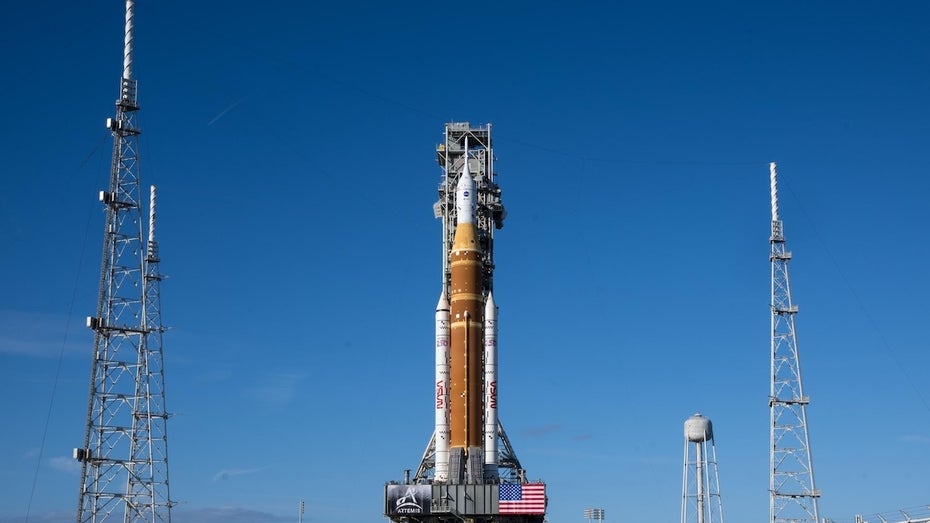
The lunar mission Artemis 2 has caused unexpected effects on GPS signals due to changes in the ionosphere.
The Moon mission Artemis 2 has had surprising effects on the Earth's ionosphere, negatively impacting GPS signals. The SLS rocket used for the mission's launch has caused a significant change in electron concentration in the ionosphere. These changes are not only important for space travel but could also have far-reaching consequences for terrestrial navigation.
Impact on GPS Signals
The ionosphere is a layer of the Earth's atmosphere that is crucial for the propagation of radio waves, including GPS signals. The changes in electron concentration caused by the Artemis 2 mission led to disruptions in signal transmission. These disruptions can impair the accuracy of GPS data, which could be particularly problematic for self-driving cars.
A recent study has shown that the ionospheric changes caused by Artemis 2 have created a 5000-kilometer-long hole in the ionosphere. This hole has the ability to disrupt GPS signals, potentially leading to navigation errors. The implications are particularly concerning as more and more vehicles rely on precise GPS data to navigate safely.
Risks for Autonomous Vehicles
The disruptions in the ionosphere could lead to accidents in self-driving cars that depend on GPS signals to perceive their environment and make decisions. The study warns that even minor inaccuracies in GPS data can have fatal consequences. The reliance on precise navigation systems makes the automotive industry vulnerable to such disruptions.
Researchers emphasize the importance of further investigating the effects of space missions on the ionosphere. Insights from the Artemis 2 mission could help better plan future space projects and ensure the safety of autonomous vehicles. The need to monitor the ionosphere and its changes is considered increasingly important.
NASA has already announced that it will continue to analyze the effects of the Artemis 2 mission on the ionosphere. The results of these analyses could be significant not only for space travel but also for the development of technologies to improve GPS navigation. The research will focus on how such disruptions can be minimized to enhance road safety.
The Artemis 2 mission is part of the Artemis program, which aims to bring humans back to the Moon and establish a long-term presence there. The mission is seen as an important step in space exploration but also presents challenges that extend beyond space travel. The effects on the ionosphere are an example of how complex the interactions between space travel and the Earth are.
The findings from the study could also impact other technologies that rely on GPS, such as aviation and maritime navigation. The need to understand the ionosphere and its changes is viewed as critical for the safety and efficiency of these systems. Research will continue to be pursued intensively to address the challenges posed by such changes.
Ähnliche Artikel

PostgreSQL fixes 52 security vulnerabilities
A critical bug in PostgreSQL allows users to execute code on the server. Updates have been released to close this and ot...

Critical Security Vulnerability Discovered in Apache HTTP Server
A serious vulnerability in the HTTP/2 module of the Apache HTTP Server allows attackers to execute code remotely....

Operation Endgame: Europol fights against cybercrime
Europol has launched Operation Endgame to combat malware networks worldwide and secure millions of records from victims....

Check Point Gateways Target of PHP2Shell Attacks
Vulnerable Check Point Security Gateway instances were attacked by PHP2Shell attacks that used data-wiping software on V...
comment Kommentare (0)
Noch keine Kommentare. Schreiben Sie den ersten!
Kommentar hinterlassen