
CERN: Particle accelerator shut down for three years
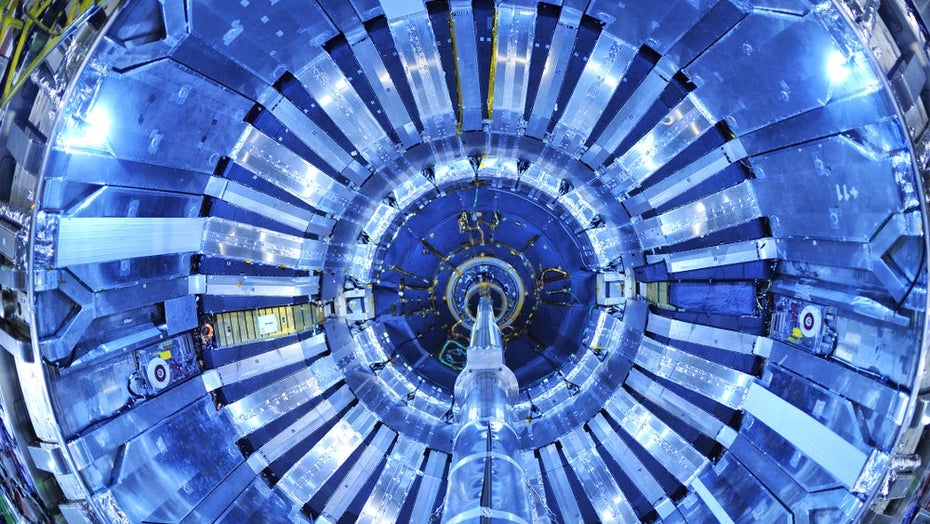
The particle accelerator at CERN will be shut down for three years to carry out extensive upgrades.
The world's largest particle accelerator, the Large Hadron Collider (LHC) at CERN in Geneva, will be shut down for the next three years. This measure is part of a comprehensive expansion aimed at significantly increasing the capacities and performance of the accelerator. The decision to shut down the LHC was made by CERN officials to expand the scientific possibilities for future experiments.
The expansion of the LHC is necessary to advance research in the field of particle physics. The accelerator has enabled significant discoveries in recent years, including the discovery of the Higgs boson in 2012. However, to gain even deeper insights into fundamental questions of physics, technical improvements are required, which will be implemented during the shutdown.
Planned Expansions and Improvements
Planned expansions include, among other things, the replacement of components and the improvement of detector technology. These measures aim to increase the efficiency of experiments and boost the data rate that the LHC can process. Additionally, efforts are being made to improve beam quality to enable more precise collisions between particles.
Another important aspect of the expansion is the integration of new technologies that have been developed in recent years. These technologies could help push the boundaries of current research and discover new physical phenomena. Scientists at CERN are optimistic that the improvements will lead to groundbreaking results that could revolutionize our understanding of the universe.
The shutdown of the LHC is not the first time the accelerator has been turned off for maintenance and expansion work. In the past, there have been several phases of shutdown, each leading to significant technical advancements. However, the current shutdown is the longest in the history of the LHC and is expected to last until 2029.
Scientific Significance and Future Perspectives
The work at the LHC is significant not only for physics but also for adjacent disciplines such as materials science and medicine. The technologies developed as part of the LHC program often find applications in other fields, highlighting the relevance of research at CERN. Scientists hope that the new insights resulting from future experiments will also enable practical applications in industry and healthcare.
The international community of physicists is following developments at CERN with great interest. The results of upcoming experiments could not only confirm existing theories but also propose new hypotheses that expand the understanding of matter and the forces that shape the universe. Anticipation for the recommissioning of the LHC is therefore high, and scientists are eager for the new discoveries that the coming years will bring.
The shutdown of the LHC is accompanied by a variety of projects aimed at modernizing CERN's infrastructure and improving research conditions. These projects are part of a long-term strategy aimed at positioning CERN as a leading center for particle physics. The investments in the expansion of the LHC are a clear commitment to the importance of fundamental research for science and society.
Ähnliche Artikel

Automotive industry fights against intelligence service reform
The automotive industry criticizes the access to telemetry data by intelligence services and warns against data retentio...

Windows 11 Update KB5121003 Causes Crashes
The Windows 11 Update KB5121003 is causing crashes and restarts for users. A problematic driver could be the cause....

New CRISPR Method Enables Sex Reversal in Mice
Scientists have developed an innovative CRISPR technique that allows for the removal of the Y chromosome in mice, creati...

Impact Labs: Workshops for Women in IT Launch
The Impact Labs offer a series of workshops for women in IT professions, taking place in October and December 2026....

comment Kommentare (0)
Noch keine Kommentare. Schreiben Sie den ersten!
Kommentar hinterlassen