
Retailers are moving away from self-service checkouts
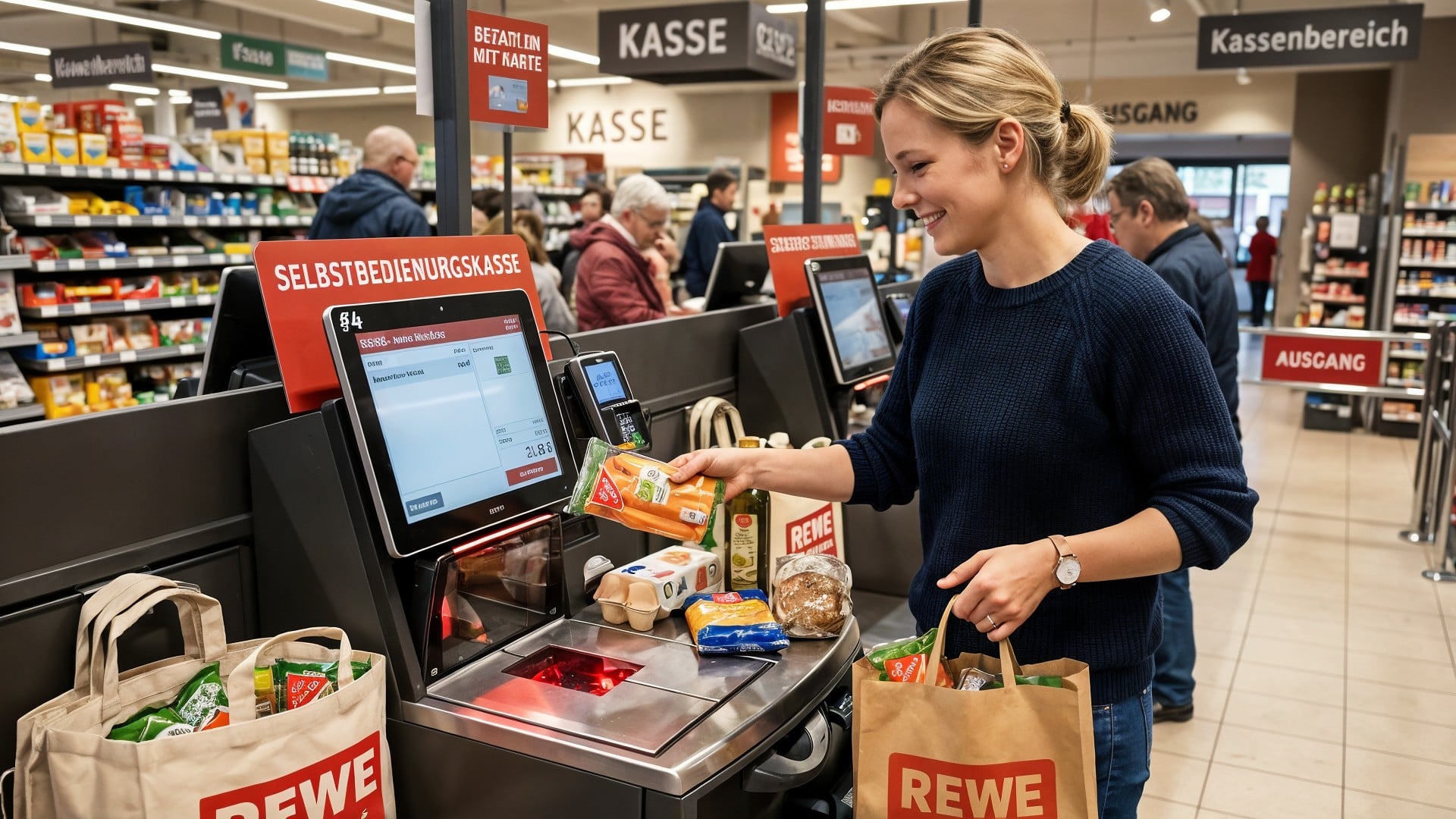
Growing losses and customer frustration are leading retailers to increasingly eliminate self-service checkouts and invest in new technologies.
The retail industry is undergoing a significant transformation as more and more stores are moving away from self-checkout systems (SCS). The reasons for this trend are varied, ranging from increasing losses due to theft to growing frustration among customers. These developments are forcing retailers to rethink their strategies and implement new technologies.
A central issue with SCS is the rise in thefts. Many retailers report an increase in losses caused by insufficient controls at the self-checkout stations. Customers take advantage of the opportunity to scan items unsupervised, leading to significant financial losses.
In addition to financial losses, many retailers complain about the frustration that SCS causes for customers. Long wait times and technical problems are common complaints. Customers standing at the checkouts often experience delays that make shopping less enjoyable. This dissatisfaction has led some stores to completely remove self-checkout systems from their offerings.
Investments in New Technologies
In light of the challenges associated with SCS, many retailers are now focusing on alternative technologies. In particular, artificial intelligence (AI) is increasingly seen as a solution to enhance efficiency in retail. AI can help improve customer service while simultaneously reducing operating costs.
Another area where retailers are investing is digital price tags. This technology allows stores to update prices in real-time, making pricing more flexible. Digital price tags can also help increase transparency for customers by providing immediate information about price changes.
The decision to move away from SCS is not only a reaction to current problems but also a strategic realignment. Retailers recognize that the future of commerce lies in the integration of new technologies that benefit both customers and the business. Investments in AI and digital price tags are part of a broader plan to future-proof retail.
The developments in the industry show that retailers are willing to adapt to the needs of their customers. By focusing on innovative solutions, they hope to increase customer satisfaction while minimizing financial losses. The shift away from SCS is a clear indicator of this change.
Recent surveys among retailers confirm the trend: A growing majority plans to forgo self-checkout systems in the coming years. Instead, they are turning to technologies that offer better control and an improved shopping experience. These changes could have far-reaching implications for how customers shop in the future.
Ähnliche Artikel

Experts warn about KIMVG and potential lawsuits
During the hearing on the AI Migration Act, experts expressed concerns about potential lawsuits and longer proceedings....

The Binding of Isaac: GTA 6 Easter Egg Causes a Stir
An Easter egg in The Binding of Isaac themed around GTA 6 has triggered a shitstorm. AI-generated music is causing contr...

Riemann Hypothesis: AI Proof Under Review
Levent Alpöge and Claude have found a possible proof for the Riemann Hypothesis. A second approach without AI is also be...

AI agents take on more responsibility in the SOC
A survey shows that security leaders are increasingly willing to let AI agents act autonomously....
comment Kommentare (0)
Noch keine Kommentare. Schreiben Sie den ersten!
Kommentar hinterlassen