
Experts warn about KIMVG and potential lawsuits
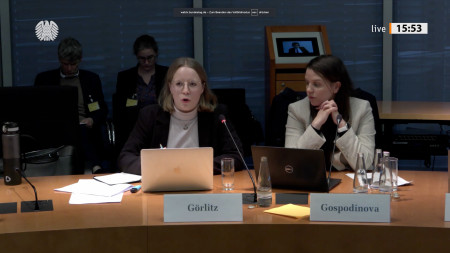
During the hearing on the AI Migration Act, experts expressed concerns about potential lawsuits and longer proceedings.
During the hearing on the AI Migration Act (KIMVG), experts warned of the possible negative consequences of the new law. They called for clear limits on the use of Artificial Intelligence (AI) as well as independent reviews to ensure the integrity of the processes. The concerns particularly relate to the possibility that the law could lead to more errors and thus an increase in lawsuits.
Expert Opinions on the KIMVG Hearing
The experts emphasized that without clear guidelines and review mechanisms, the risk of erroneous decisions increases. These could not only burden the affected individuals but also overload the judiciary. An inadequate regulatory framework could lead to longer procedures instead of accelerating them, which was the original goal of the KIMVG.
Some experts pointed out that while the introduction of AI in migration procedures offers potential for increased efficiency, it also carries risks. The possibility that AI systems make erroneous decisions could jeopardize the rule of law. Therefore, it is essential that the technology is used transparently and understandably.
The discussion around the KIMVG has also raised the question of how the rights of migrants can be safeguarded in an increasingly automated process. Critics argue that reliance on AI-supported decisions undermines the human component in the migration process. This could lead to alienation between the authorities and the migrants.
Legal Situation and Possible Consequences
The legal framework for the use of AI in the migration sector is currently unclear. Experts therefore call for a comprehensive review of existing laws and guidelines to ensure that the rights of those affected are not violated. Inadequate regulation could not only lead to an increase in lawsuits but also undermine trust in the migration authorities.
The hearing also highlighted the need for interdisciplinary collaboration between technicians, lawyers, and social scientists. Only through such exchange can it be ensured that the technology is used responsibly. The experts agree that a clear definition of the limits of AI use is essential to avoid misuse and misapplications.
The experts' concerns are not unfounded. In other countries where AI is already used in migration procedures, similar problems have occurred. There, lawsuits due to erroneous decisions frequently arose, significantly prolonging the processes. These experiences should serve as a warning signal for the implementation of the KIMVG in Germany.
The federal government has announced that it will take the experts' recommendations seriously and incorporate them into the further drafting of the law. The next steps in the legislation will be crucial for how the use of AI in the migration sector is shaped and whether the feared negative consequences actually occur.
Ähnliche Artikel

The Binding of Isaac: GTA 6 Easter Egg Causes a Stir
An Easter egg in The Binding of Isaac themed around GTA 6 has triggered a shitstorm. AI-generated music is causing contr...

Riemann Hypothesis: AI Proof Under Review
Levent Alpöge and Claude have found a possible proof for the Riemann Hypothesis. A second approach without AI is also be...

AI agents take on more responsibility in the SOC
A survey shows that security leaders are increasingly willing to let AI agents act autonomously....

Ericsson develops drone detection via 5G networks
Ericsson plans to use 5G networks for drone detection. Initial pilot projects are scheduled for 2027....
comment Kommentare (0)
Noch keine Kommentare. Schreiben Sie den ersten!
Kommentar hinterlassen