
Colors of Motherboard Connectors Since 1999
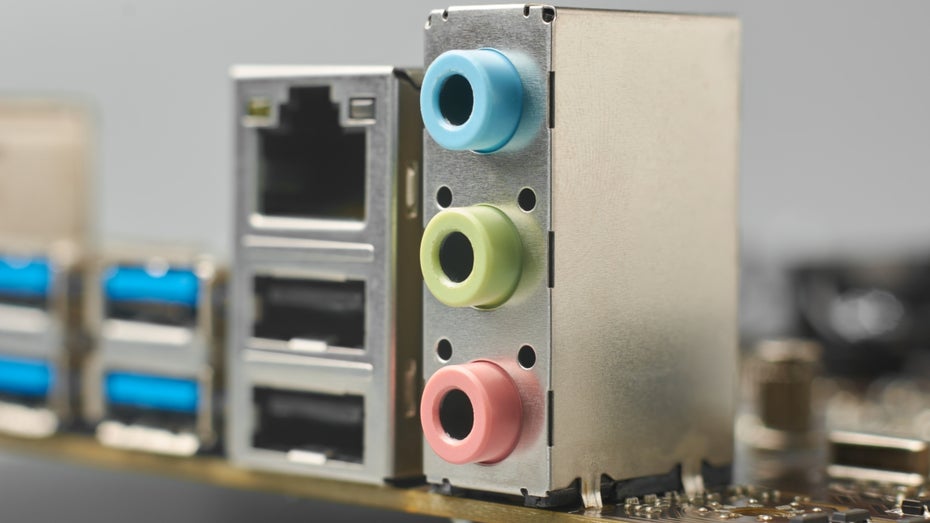
The color coding of motherboard connectors has not changed since 1999. Red, green, and blue represent specific functions.
The color coding of audio jacks and other connections on motherboards has not changed since 1999. Red represents microphone connections, green for audio output, and blue for audio input. This color coding is not just a matter of design, but has established itself as a practical standard that enhances user-friendliness.
The decision to use these colors was made to allow for clear and intuitive identification of the connections. Users can quickly recognize which connection is intended for which function through the colors. This visual aid is particularly important at a time when computers and audio hardware are becoming increasingly complex.
Although the technology behind the connections has evolved, the color coding remains constant. The standardization of colors has helped both manufacturers and consumers speak a common language when it comes to connecting audio and multimedia devices. This consistency has proven beneficial as it minimizes confusion and misconnections.
The Importance of Color Coding
Color coding is not just an aesthetic decision, but also has practical reasons. It allows users to quickly and efficiently find the right connections without having to think long or consult the manual. This user-friendliness is especially important for people who do not have technical expertise.
The use of red, green, and blue has become so widespread that it can be found in many different devices and systems. These colors are not limited to motherboards but can also be seen in external audio devices and mixers. The consistency in color coding promotes interoperability between different devices and manufacturers.
Technological Developments and Their Impact
Despite technological advances in audio technology, the color coding remains unchanged. The basic functions of the connections are still the same, even though the materials and technologies used have evolved. The color coding has proven to be so useful that there is no incentive to change it.
The decision to maintain the colors also reflects the stability of standards in computer and audio technology. While new technologies and formats emerge, the need to ensure user-friendliness and accessibility remains a priority. Color coding is a simple yet effective means to achieve these goals.
The color coding of motherboard connections is an example of how design and functionality can go hand in hand. The decision to maintain these colors for nearly three decades shows that sometimes the simplest solutions are the most effective. Users can rely on the colors to provide a consistent and understandable guide when connecting their devices.
Ähnliche Artikel

Apple brings touchscreens to the MacBook Pro
Apple has introduced new MacBook Pro models with touchscreens and OLED displays that can cost up to 16,000 euros....

Apple confirms issues with the iPhone Duo
Users of the new iPhone Duo report cracks and breaks. Apple acknowledges difficulties with a small number of devices....

Sony's PS6 Handheld: AMD's RDNA 5 for Gaming Revolution
Sony is developing a new handheld with AMD's RDNA 5, set to launch alongside the PS6. The device is codenamed Project Ca...

Problems with the iPhone Duo: Screens Breaking
After the launch of the iPhone Duo, early users are reporting display issues. The inner foldable display is tearing at t...

comment Kommentare (0)
Noch keine Kommentare. Schreiben Sie den ersten!
Kommentar hinterlassen