
Hugging Face Malware Campaign Targets GPU Servers

A new malware campaign uses Hugging Face models to hijack GPUs for crypto mining. One model has been downloaded over 28,000 times.
A recently uncovered malware campaign has once again exploited Hugging Face models to hijack GPU servers for crypto mining. This activity occurred just days after a previous shutdown and highlights the ongoing threat of cybercrime in the field of artificial intelligence. The campaign aims to steal computing resources while also installing backdoors in the affected systems.
A particularly concerning detail is that one of the affected models was downloaded over 28,000 times. This suggests that many users may have unknowingly contributed to the spread of the malware. The use of Hugging Face models, which are widely used in the AI community, makes this campaign especially dangerous.
Technical Details of the Malware
The malware is designed to leverage the computing power of graphics cards to mine cryptocurrencies. This typically occurs without the affected users being aware of it. The backdoors installed by the malware allow attackers to take control of the affected systems and use them for further attacks.
In addition to attacks on GPU servers, there are reports of a fake Solana starter kit application on GitHub. This application is designed to deceive AI coding agents into installing a NetSupport RAT (Remote Access Trojan). Such trojans are particularly dangerous as they grant attackers full access to the affected systems.
The return of this malware campaign underscores the need for businesses and individuals to strengthen their security measures. The use of open-source models and resources carries risks, especially if they are not properly vetted. Security researchers warn that the spread of such malware in the AI community could increase if appropriate measures are not taken.
The cybersecurity community has already responded to the threat and is working on solutions to stop the spread of this malware. It is recommended to regularly perform security updates and monitor for suspicious activities on servers. Collaboration between developers, security researchers, and platform providers is crucial to combat such threats.
The incidents surrounding the Hugging Face malware campaign and the fake Solana application are part of a larger trend where cybercriminals attempt to exploit vulnerabilities in popular software tools. The constant evolution of malware techniques requires a proactive approach to cybersecurity.
The threat of crypto-mining malware is not new, but it has intensified in recent years. Attackers are increasingly using AI models and other technologies to refine and automate their attacks. The combination of crypto mining and AI models poses a serious challenge to the cybersecurity landscape.
Ähnliche Artikel

CISA warns of vulnerabilities in Ivanti Connect Secure
Two critical vulnerabilities in Ivanti Connect Secure have been reported by CISA as being exploited. Attackers can gain ...

Trojanized Claude Code Extension Discovered
A trojanized version of the Claude Code Extension was discovered in the Cursor Marketplace, which installs an SSH backdo...

CISA warns of Fragnesia Linux security vulnerability
CISA warns of a critical security vulnerability in the Linux kernel that is exploited in connection with PHP2Shell attac...
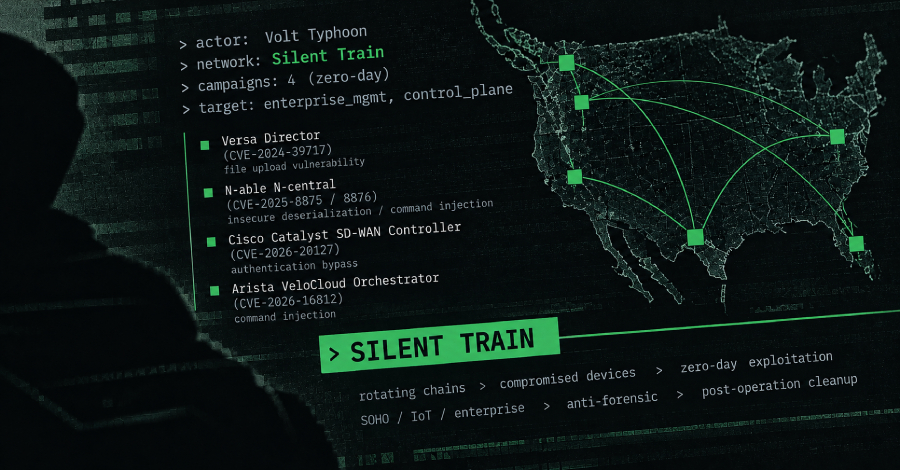
Volt Typhoon and the Silent Train Network
The cyber espionage group Volt Typhoon has used a secret network called Silent Train for cyber attacks....

comment Kommentare (0)
Noch keine Kommentare. Schreiben Sie den ersten!
Kommentar hinterlassen