
AI in Recruiting: Transparency Remains an Issue
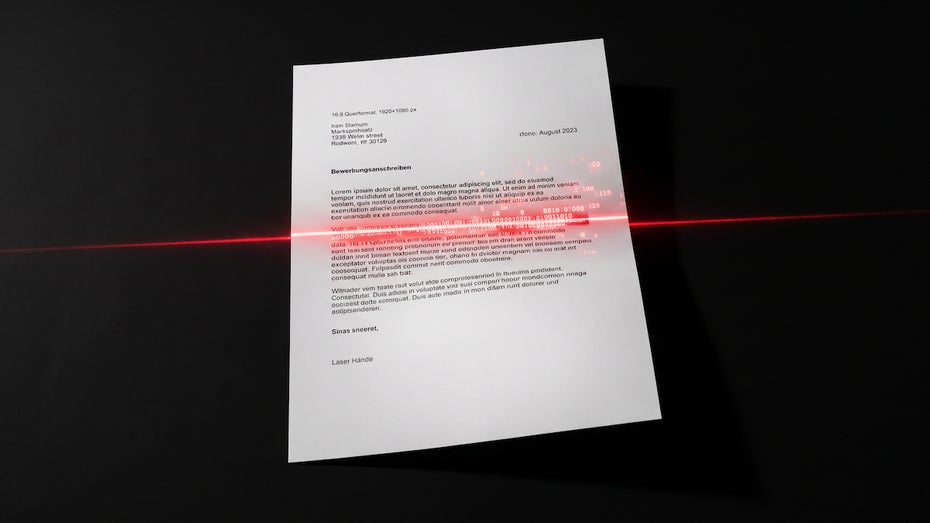
More and more companies are using AI in recruiting, but transparency towards applicants is often insufficient.
More and more German companies are relying on Artificial Intelligence (AI) to optimize the application process and find suitable candidates more quickly. This technology allows for the efficient analysis of large volumes of applications and the selection of the most promising candidates. However, there are concerns regarding transparency and fairness, which are often neglected in this process.
The AI Transparency Index shows that many companies do not adequately inform whether and how AI is used in their recruiting process. This leads to applicants being unclear about whether their application might be filtered out by an algorithm before being seen by a human. This lack of transparency can significantly undermine trust in the application process.
The Role of AI in the Application Process
The use of AI in recruiting has increased significantly in recent years. Companies use algorithms to scan resumes, identify key qualifications, and assess the suitability of applicants. These technologies promise a faster and more objective selection of candidates. Nevertheless, there are also critical voices pointing out that such systems can reproduce biases if they are not carefully developed and monitored.
A central problem is that many applicants do not know which criteria are used by AI to evaluate their applications. Often, the algorithms are not transparent, leading to uncertainty among applicants. They wonder whether their qualifications and experiences are being adequately recognized or whether they are being rejected based on non-transparent criteria.
The AI Transparency Index
The AI Transparency Index was established to help companies assess and improve their practices in the field of Artificial Intelligence. The index analyzes how openly companies communicate about the use of AI in recruiting and what information they provide to applicants. The results show that there is still significant room for improvement in many cases.
Some companies have already taken steps to make their processes more transparent. This includes providing information about how the AI works and what data it uses. Nevertheless, the majority of companies fall short of expectations regarding openness and clarity. This could have long-term negative effects on the employer brand, as applicants increasingly value transparency.
The discussion about the use of AI in recruiting is also influenced by legal frameworks. Data protection laws and anti-discrimination laws require companies to ensure that their algorithms are fair and non-discriminatory. This necessitates a careful review of the technologies used and their impact on applicants.
The challenge for companies is to find a balance between efficiency and transparency. While AI-supported systems can significantly reduce the processing time of applications, companies must also ensure that they adequately inform applicants and take their concerns seriously. Developing policies and standards for the use of AI in recruiting could be a step in the right direction.
Current surveys show that applicants are increasingly willing to avoid companies that are not transparent about their recruiting practices. This could lead companies that rely on AI to rethink their strategies in order not to fall behind in the competition for talent.
Ähnliche Artikel

New dwarf planet discovered beyond Pluto
An algorithm has identified a possible new dwarf planet beyond Pluto, based on data from the Vera C. Rubin Observatory....

Microsoft presents Maia 300 for AI inference
Microsoft has introduced the Maia 300, which is set to serve as the primary inference system for AI services starting in...

Mistral Large 4: Improved AI Programming Released
Mistral announces the weights of its AI flagship Large 4 and highlights the improved programming performance....
OpenAI's Compaction Feature Poses Security Risks
A new security report shows that OpenAI's Compaction feature can be used to extract hidden thought processes....

comment Kommentare (0)
Noch keine Kommentare. Schreiben Sie den ersten!
Kommentar hinterlassen