
Cost Trap Cloud: Server Environment Comparison
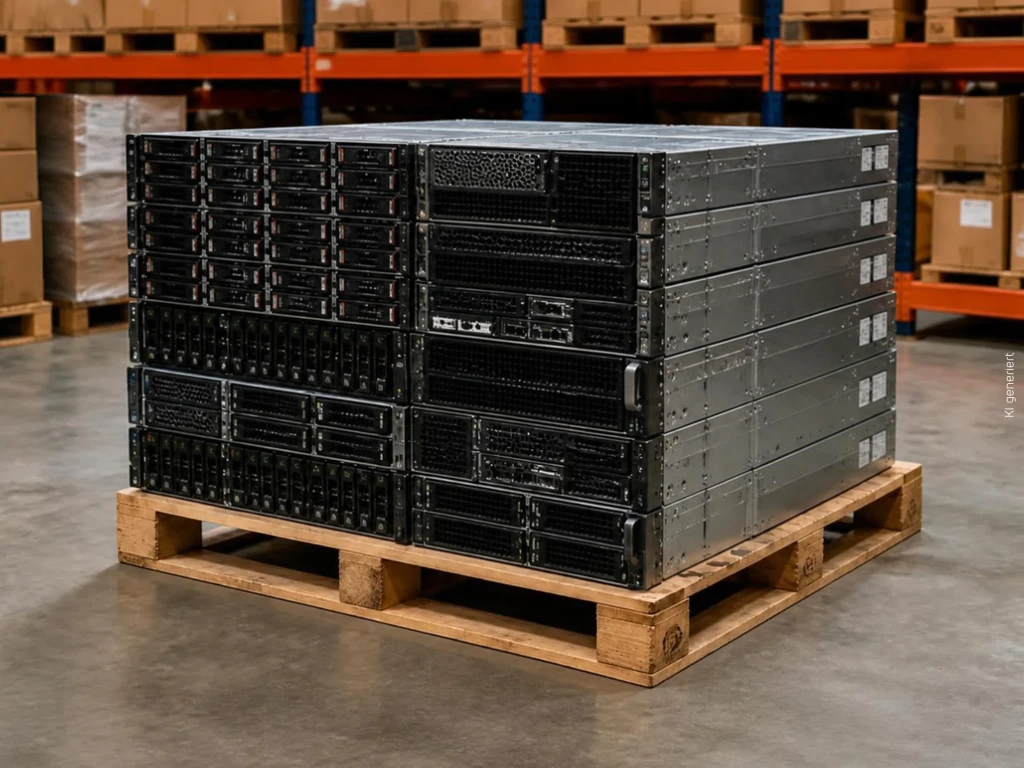
The article highlights the advantages and disadvantages of Cloud IaaS and local server environments and their economic aspects.
In the digital age, companies face the crucial question of whether to rely on cloud infrastructures or local server solutions. The choice between these two options depends on various factors, including the business model, cost-effectiveness, and corporate philosophy. A reliable IT infrastructure is essential for economic success, which is why the decision for the right solution is of great importance.
Differences between Cloud and Local Infrastructure
Cloud-based solutions, also known as Infrastructure as a Service (IaaS), are hosted in data centers and managed by a service provider. Access to this infrastructure is via the internet, allowing for high flexibility and scalability. In contrast, data in a local IT infrastructure is processed directly within the company network, allowing both internal and external access. These differences in data processing and access are crucial for choosing the right solution.
A significant advantage of cloud solutions is their easy scalability. Companies can quickly add resources as needed without making extensive investments in hardware. In a local server environment, however, careful planning is required to ensure efficient scaling. If a concept is in place, scaling can also occur quickly. Additionally, there is the possibility of selling unused servers, which provides additional financial flexibility.
Economic Aspects and Data Sovereignty
The decision for a local server environment can also make sense for economic reasons. This infrastructure offers predictable and manageable costs, as IT hardware can either be purchased or leased. A purchase allows companies to stabilize costs over the lifespan of a server, which typically lasts five years. During this time, there are no cost fluctuations since the hardware has already been acquired.
Another advantage of the local server environment is data sovereignty. Companies retain control over their data, which is particularly important in times of increasing data protection requirements. Independence from an internet connection is another plus, as data processing does not depend on external factors. This can be crucial in critical situations where a stable internet connection is not guaranteed.
However, migrating from a cloud IaaS solution back to a local infrastructure is a complex process. While the transition from local to cloud is supported by tools from most vendors, the reverse migration requires careful planning and technical expertise. To leverage the benefits of both systems, a hybrid solution is often recommended, combining the strengths of both approaches.
The secondary market for refurbished servers and IT asset disposition (ITAD) reached a volume of $24.8 billion in 2026. This demonstrates the growing interest in sustainable IT solutions and the reuse of hardware. Companies that no longer need their servers can benefit from this market and partially recoup their investments.
The decision between cloud and local infrastructure remains an individual challenge for each company. The pros and cons of both options must be carefully weighed to find the best solution for the specific requirements and goals of the company. Ultimately, the decision lies in the hands of management, which must consider the long-term impacts on IT strategy and the economic situation.
Ähnliche Artikel

Data Centers: Energy Supply and Acceptance in Focus
The planning of new data centers requires a holistic understanding of energy supply and societal acceptance....
Axis brings cameras to private 5G networks
The new Axis TP3604-E camera enables connection to private 5G networks and offers high data rates....
Performance Benchmark for IT Infrastructure Necessary
Performance issues in IT systems require clear comparison standards....
TelemaxX expands fiber optic network to 100 Gbit/s
The Karlsruhe data center operator TelemaxX is expanding its fiber optic network and now offers connections of up to 100...

comment Kommentare (0)
Noch keine Kommentare. Schreiben Sie den ersten!
Kommentar hinterlassen