
New dwarf planet discovered beyond Pluto
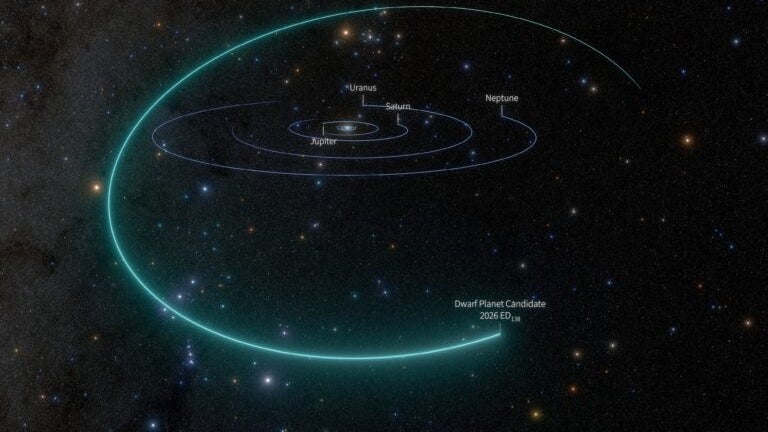
An algorithm has identified a possible new dwarf planet beyond Pluto, based on data from the Vera C. Rubin Observatory.
Scientists have discovered a possible new dwarf planet beyond Pluto, identified through a newly developed algorithm. This discovery is based on data collected by the Vera C. Rubin Observatory. The celestial body was already visible in telescope images in 2016, but its significance was only recognized now.
Algorithm Enables Discovery
The algorithm used to identify the new dwarf planet is the result of years of research and development. It analyzes large amounts of astronomical data and can recognize patterns that human astronomers may overlook. This technology could revolutionize the way astronomers search for and classify new celestial bodies.
The researchers at the Vera C. Rubin Observatory have not only discovered the new dwarf planet using this method but have also significantly increased the efficiency of data analysis. The celestial body, which has not yet been given an official name, could provide important information about the formation and evolution of the solar system.
Historical Images and Their Significance
The images showing the new dwarf planet date back to 2016. At that time, however, the celestial body was not recognized as such. The analysis of the old data has shown that the planet was present in the images, highlighting the importance of data archiving in astronomy.
The discovery of the new dwarf planet could also impact the classification of celestial bodies in the Kuiper Belt. The Kuiper Belt is a region in the outer solar system that contains many small, icy bodies. Identifying new objects in this area could expand our understanding of the dynamics and composition of the solar system.
The researchers plan to conduct further observations to learn more about the characteristics of the new dwarf planet. This includes measurements of its size, composition, and orbit. This information is crucial for better understanding the nature of the celestial body and determining its role in the solar system.
The discovery was published by an international group of astronomers specializing in the study of the Kuiper Belt. This group has made several significant discoveries in recent years that have expanded our knowledge of the outer regions of the solar system.
The results of this research are expected to be published in scientific journals in the coming months. The astronomy community is eager for further developments and the potential implications of this discovery for future research in the field of planetology.
Ähnliche Artikel

Microsoft presents Maia 300 for AI inference
Microsoft has introduced the Maia 300, which is set to serve as the primary inference system for AI services starting in...

Mistral Large 4: Improved AI Programming Released
Mistral announces the weights of its AI flagship Large 4 and highlights the improved programming performance....

OpenAI's Compaction Feature Poses Security Risks
A new security report shows that OpenAI's Compaction feature can be used to extract hidden thought processes....

Elvis heirs sue AI company Anthropic
The rights holders of Elvis Presley have sued Anthropic because the AI Claude was trained on 274 songs of the musician....

comment Kommentare (0)
Noch keine Kommentare. Schreiben Sie den ersten!
Kommentar hinterlassen