
Rules for Smart Doorbells and Video Cameras
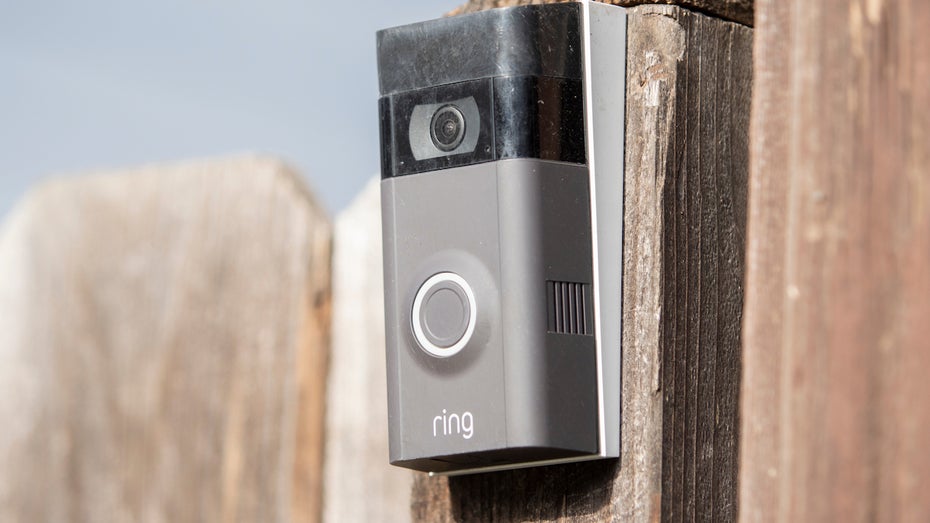
Smart doorbells and video cameras provide security, but their use must comply with data protection regulations. Those who ignore this risk high fines.
Smart doorbells and video cameras are becoming increasingly popular as they help homeowners identify unwanted guests and enhance their security. Products like the Ring camera are now available for under 50 euros and promise easy installation as well as user-friendly operation. However, the use of these technologies is not without legal frameworks that must be observed.
Data Protection and Legal Requirements
Before users install a Ring camera or similar surveillance solutions at their front door, they must ensure that they comply with data protection regulations. In Germany, the requirements are governed by the General Data Protection Regulation (GDPR) as well as the Federal Data Protection Act (BDSG). These laws require that the privacy of third parties is respected, which means that recordings extending beyond one's own property can be problematic.
A central element of the GDPR is the necessity of having a lawful basis for processing personal data. When using surveillance cameras, this may require the consent of the individuals being filmed. However, in many cases, obtaining such consent can be difficult, especially when the camera captures public areas.
Additionally, users must ensure that recordings are not stored longer than necessary. The GDPR stipulates that data may only be retained as long as it is necessary for the purpose of processing. This means that homeowners should regularly review their stored videos and delete them if necessary.
Fines and Legal Consequences
Those who violate data protection regulations can expect to face hefty fines. Penalties can be significant depending on the severity of the violation, reaching up to 20 million euros or 4% of global annual revenue. This demonstrates how seriously authorities take compliance with data protection regulations. In recent years, there have already been several cases where homeowners were held accountable for the improper use of surveillance cameras.
Another aspect to consider is the potential liability in the event of an incident. If a camera is not properly installed or data protection regulations are not adhered to, the homeowner could be held liable in the case of a burglary or other crime. This can have not only financial repercussions but also legal consequences.
To avoid legal issues, users should thoroughly inform themselves before installing surveillance cameras and seek legal advice if necessary. It is advisable to check the specific requirements in one's own municipality or city, as there may be differences. In some regions, there are additional regulations that further restrict the use of surveillance technologies.
Ähnliche Artikel

Hackers use AI tool Cairn for cyber attack
A new cyber attack demonstrates how hackers use the AI tool Cairn to discover security vulnerabilities....

Microsoft Edge introduces new Lockdown Mode
Microsoft Edge blocks error-prone graphics interfaces in the new Lockdown Mode to protect vulnerable users....
N-able Cloud Server Attacked by Hackers
N-able reports on a security incident in which hackers gained access to a cloud server and compromised the email securit...

F5 releases emergency patches for BIG-IP vulnerabilities
F5 warns of critical BIG-IP vulnerabilities that can lead to DoS and remote code execution. Customers are urged to updat...
comment Kommentare (0)
Noch keine Kommentare. Schreiben Sie den ersten!
Kommentar hinterlassen