
Baisse des immatriculations de voitures électriques en mai 2026
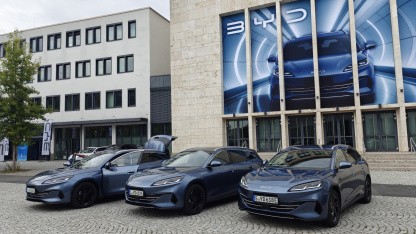
Les chiffres d'immatriculation des voitures électriques ont diminué en mai 2026, malgré les primes à l'achat et les tensions géopolitiques.
Les chiffres d'immatriculation des voitures électriques en Allemagne ont diminué en mai 2026 par rapport au mois précédent. Cela se produit malgré les primes à l'achat continues offertes par le gouvernement pour encourager la transition vers des véhicules sans émissions. La baisse des chiffres soulève des questions sur l'évolution actuelle du marché, en particulier dans une année où la demande de solutions de mobilité durables reste élevée.
Un facteur essentiel qui pourrait contribuer à cette baisse est les tensions géopolitiques, en particulier le conflit persistant en Iran. Les incertitudes sur le marché international pourraient avoir des répercussions sur les chaînes de production et d'approvisionnement de l'industrie automobile, ce qui pourrait affecter négativement la disponibilité des voitures électriques. Cette situation pourrait inquiéter les acheteurs potentiels et les amener à renoncer à un achat.
Leader du marché BYD et les hybrides rechargeables
Malgré la baisse des immatriculations des véhicules entièrement électriques, BYD reste le leader du marché dans le segment des hybrides rechargeables. L'entreprise a élargi sa gamme de produits ces derniers mois et propose une variété de modèles pouvant être alimentés à la fois par des moteurs électriques et à combustion. Cette flexibilité pourrait être attrayante pour de nombreux acheteurs qui ne souhaitent pas encore s'engager pleinement sur les véhicules électriques.
Les chiffres de vente des hybrides rechargeables montrent que de nombreux consommateurs recherchent une solution de transition qui leur offre les avantages de la mobilité électrique sans avoir à renoncer à l'autonomie et à la flexibilité d'un véhicule traditionnel. Ces véhicules pourraient jouer un rôle important dans l'augmentation de l'acceptation des voitures électriques dans l'ensemble, même si les voitures électriques pures sont actuellement moins demandées.
Les baisses d'immatriculation pourraient également être influencées par la hausse des prix des matières premières nécessaires à la fabrication des batteries. Le lithium, le cobalt et le nickel sont devenus plus chers ces derniers mois, ce qui a augmenté les coûts de production des véhicules électriques. Ces hausses de prix pourraient avoir un impact sur les prix pour les consommateurs finaux et donc influencer la décision d'achat.
En plus des facteurs économiques, il existe également des défis techniques qui pourraient entraver la diffusion des voitures électriques. Bien que l'infrastructure de recharge en Allemagne ait été considérablement développée ces dernières années, il existe encore des régions où la disponibilité des stations de recharge est insuffisante. Cela pourrait décourager les acheteurs potentiels qui ont des préoccupations concernant l'autonomie et les temps de charge.
Le gouvernement fédéral a annoncé qu'il continuerait à investir dans la promotion des véhicules électriques et l'amélioration de l'infrastructure de recharge. Ces mesures visent à accroître l'acceptation des voitures électriques et à atteindre les objectifs climatiques. Néanmoins, il reste à voir si ces initiatives seront suffisantes pour inverser la tendance à la baisse des immatriculations.
En mai 2026, un total de 20 000 nouvelles voitures électriques ont été immatriculées en Allemagne, ce qui représente une baisse de 15 % par rapport à avril. Ces chiffres illustrent les défis auxquels le marché des véhicules électriques est actuellement confronté.
Ähnliche Artikel

L'Ukraine développe une moto électrique pour le front
L'Ukraine a développé une moto électrique silencieuse pour le front, équipée d'un prolongateur d'autonomie....
Avenir du stockage des données : Nouvelles technologies en focus
Des supports de stockage innovants devraient sécuriser les archives de données pendant des siècles. Le podcast Bit-Rausc...
Optimiser le stockage de chaleur des déchets thermiques des centres de données
Les stockages thermiques permettent une utilisation flexible des déchets thermiques des centres de données et créent de ...
L'application météo de Windows 11 ralentit les PC
L'application météo sous Windows 11 pourrait affecter les performances des PC, car elle consomme beaucoup de mémoire, mê...

comment Kommentare (0)
Noch keine Kommentare. Schreiben Sie den ersten!
Kommentar hinterlassen