
US banks allowed to sue Apple Pay
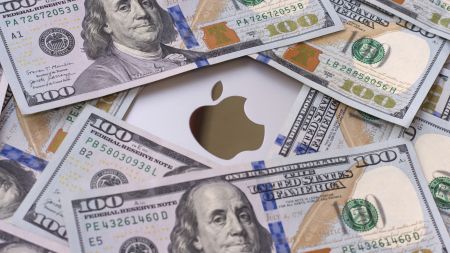
A US district judge has granted banks permission to take action against Apple Pay for alleged fee violations.
A US district judge has ruled that banks in the United States are officially allowed to sue Apple Pay. This decision enables the financial institutions to consolidate their concerns regarding Apple Pay's fee structure and take legal action. The banks argue that the fees charged by Apple are unlawful and hinder competition in digital payments.
Background of the Lawsuit
The lawsuit was initiated by several major banks that are complaining about the high fees that Apple charges for the use of its payment service. These fees affect both merchants and consumers who use Apple Pay. The banks believe that these fees are not only unfair but also violate the principles of fair competition.
The judge's decision comes at a time when digital payments are growing rapidly in the U.S. and worldwide. More and more consumers are using mobile payment services, which increases the importance of fair fee structures in this sector. The banks hope that the lawsuit will lead to a review of Apple's fee policy.
Industry Reactions
Reactions to the judge's decision are mixed. While some banks welcome the opportunity to represent their interests, others warn of the potential consequences of a protracted legal battle. Experts fear that a lawsuit against such a large player as Apple could consume significant resources and that the banks may not achieve the desired outcomes.
Apple has not publicly commented on the allegations so far. However, the company has emphasized in the past that the fees for Apple Pay are necessary to maintain the security and service of the payment service. The banks, on the other hand, argue that the fees are excessive and ultimately disadvantage users.
The lawsuit could also have implications for other digital payment services. If the banks are successful, this could lead to a reevaluation of fee structures across the entire industry. This could be significant for both consumers and merchants who rely on digital payment methods.
The legal disputes between banks and technology companies are not new. In the past, there have been similar cases where banks have taken action against other payment service providers. However, the judge's decision could set a new precedent that redefines the relationship between banks and technology companies.
The next steps in this legal dispute are eagerly awaited. The banks must now decide how to strategically build their lawsuit and what evidence they want to present to support their claims. The legal and financial implications of this lawsuit could have far-reaching consequences for the entire industry.
Ähnliche Artikel
Apple must pay $5.7 billion in patent fines
A US court has ruled that Apple infringed on patents of another company. The fine amounts to $5.7 billion....

GTA 6: Pre-orders on PS5 surpass Xbox
Microsoft sees successes for GTA 6 despite lower pre-orders on Xbox....

Hellraiser: Revival under USK review in Germany
The German release of Hellraiser: Revival is once again in jeopardy as the film must undergo USK review....

Ninja Theory vor der Schließung: Xbox-Reset in vollem Gange
Die Zukunft von Ninja Theory steht auf der Kippe, während Microsoft Hunderte von Mitarbeitern entlässt und die Macht von...

comment Kommentare (0)
Noch keine Kommentare. Schreiben Sie den ersten!
Kommentar hinterlassen