
Carl Zeiss and the Future of Microchips
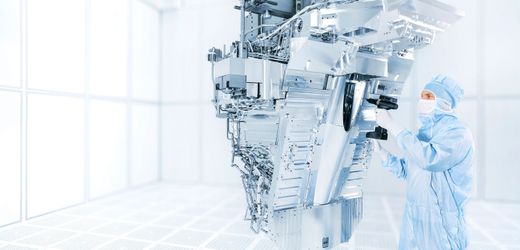
The German company Carl Zeiss plays a central role in the development of powerful microchips that drive the AI revolution.
The global AI revolution is significantly influenced by the German company Carl Zeiss from the Swabian Jura. Through innovative technologies and processes, the company has made significant advances in the production of microchips. These developments are not only important for the industry but also for society as a whole, as they form the basis for powerful AI applications.
Innovations in Microchip Manufacturing
The engineers at Carl Zeiss have discovered how to manufacture microchips that are increasingly smaller while also more powerful. These advances are the result of years of research and development based on the fields of lithography and materials science. By using the latest technologies, the chips can now be equipped with a higher density of transistors, significantly enhancing their performance.
A central aspect of these innovations is the improvement of the optical systems used in lithography. Carl Zeiss has developed special lenses that allow for the exposure of structures on the chips with an unprecedented level of precision. This precision is crucial for realizing the ever-smaller structures on microchips that are required for modern AI applications.
Impact on the AI Industry
The advances made by Carl Zeiss in microchip manufacturing have direct effects on the AI industry. More powerful microchips enable companies to develop and implement more complex algorithms that are essential for machine learning and artificial intelligence. This leads to faster calculations and greater efficiency in data processing.
Furthermore, the miniaturization of microchips also impacts energy efficiency. Smaller and more powerful chips require less energy, which not only reduces operating costs but is also more environmentally friendly. These aspects are of great importance to companies operating in the AI sector, as sustainability is increasingly coming to the forefront.
The developments at Carl Zeiss are significant not only for large technology companies. Start-ups and smaller businesses also benefit from the new opportunities created by the more powerful microchips. These companies can now develop innovative products and services that were previously not possible due to technical limitations.
The role of Carl Zeiss in the AI revolution is an example of how German companies can be at the forefront of technological developments. The combination of traditional engineering knowledge and cutting-edge research has enabled the company to position itself as a key player in the global technology landscape. Continuous investments in research and development are another factor contributing to the innovative strength of Carl Zeiss.
Currently, Carl Zeiss is working on further projects aimed at pushing the boundaries of microchip manufacturing even further. These projects aim to increase the efficiency and performance of microchips to meet the growing demands of the AI industry. Developments in this area are being closely monitored, as they have the potential to significantly influence the future of technology.
Ähnliche Artikel

Claude by Anthropic Introduces Digital Watermarks
The AI chatbot Claude by Anthropic will now mark texts with digital watermarks to identify their origin....
AI-Designed Viruses Combat E. coli
US researchers have developed AI-powered viruses that specifically infect and kill E. coli. A breakthrough in biotechnol...

ChatGPT app for Linux released
The official ChatGPT app for Linux is now available, but with limitations....

85 Percent of AI Projects Fail – Causes and Solutions
A new survey shows that 85 percent of AI projects in companies fail. The technology is not to blame, but the implementat...

comment Kommentare (0)
Noch keine Kommentare. Schreiben Sie den ersten!
Kommentar hinterlassen