
Greek satellite uses laser communication
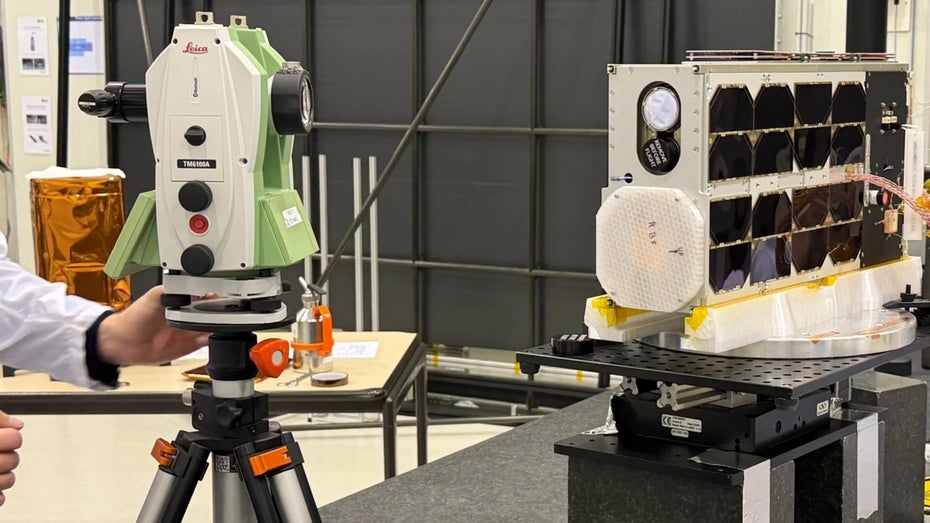
A Greek small satellite has successfully established a laser connection to Earth, enabling higher data rates than radio.
An innovative step in satellite communication was recently taken by a Greek small satellite, which successfully established a laser connection to a ground station. This technology could revolutionize the way data is transmitted between satellites and the Earth. Laser communication offers significantly higher data rates compared to traditional radio connections, which can be a great advantage for various applications.
The small satellite, developed as part of a research project, uses light beams to transmit information. This method allows for large amounts of data to be sent in a shorter time, which is particularly important for applications in Earth observation and telecommunications. The use of laser beams could significantly increase the efficiency of data transmission and expand bandwidth.
Technical Challenges and Benefits
Despite the promising benefits, laser communication also presents some challenges. One of the biggest hurdles is the technology's susceptibility to atmospheric disturbances. Factors such as weather conditions, humidity, and other environmental influences can affect signal quality. Therefore, it is crucial to develop robust systems that can operate reliably even under suboptimal conditions.
However, the benefits of laser communication cannot be overlooked. The technology not only enables higher data rates but also improves the security of transmission. Laser beams are harder to intercept than radio waves, which reduces the risk of data breaches. This could be particularly significant for military and security-related applications.
The Greek satellite is part of a larger trend in space exploration that focuses on the development of smaller, more powerful satellites. These small satellites are more cost-effective to manufacture and operate, making them attractive to many countries and companies. The combination of laser communication and small satellites could sustainably change the space industry.
Outlook on Future Applications
The successful demonstration of the laser connection by the Greek satellite could have far-reaching implications for future satellite missions. Researchers and engineers are already working to further develop and test the technology to assess its applicability in various fields. Possible areas of application range from climate research to global internet provision.
Another aspect driving the development of laser communication is the growing interest in connecting satellites. The ability to connect multiple satellites via lasers could significantly enhance the efficiency of satellite networks. This could be particularly important for providing internet services in remote areas.
Advancements in laser communication could also promote the development of new technologies in space exploration. Innovative approaches to signal transmission could help reduce the costs of satellite missions while increasing performance. Research in this area is still ongoing, and the coming years could bring significant progress.
The Greek small satellite has made an important step in satellite communication with its successful laser connection. This technology could play a key role in the development of modern communication systems in the coming years.
Ähnliche Artikel

Rhöncloud receives BSI certificate for cloud operations
The cloud service provider Rhöncloud was awarded the IT baseline protection certificate from BSI at it-sa in Nuremberg....
FWA vs. Starlink: A Comparison of Internet Connections
In Germany, an analysis shows that FWA and Starlink have different strengths, with Starlink being superior in speed....
Backup Solutions for Kubernetes Clusters in Focus
The importance of backup and recovery in Kubernetes clusters is growing. Velero offers solutions for mission-critical ap...

Power demand of German data centers to triple by 2035
The power demand of data centers in Germany is expected to be three times higher by 2035 than it is today. This has far-...
comment Kommentare (0)
Noch keine Kommentare. Schreiben Sie den ersten!
Kommentar hinterlassen