
IAA: Autonomous Delivery Vehicles in Focus
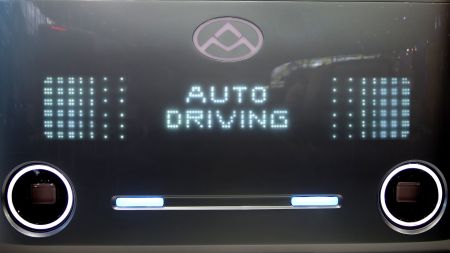
At the IAA Transportation 2026, manufacturers will showcase autonomous delivery vehicles. However, market introduction will still take some time.
At the IAA Transportation 2026, taking place in Hannover, autonomous delivery vehicles are the focus of interest. Various manufacturers are showcasing their latest developments in the field of driverless transporters, which are set to deliver goods in the future. The demand for such technologies is undeniable, as the logistics industry increasingly relies on automation to achieve efficiency and cost savings.
The presentations at the fair illustrate that the technology for autonomous vehicles is already well advanced. Manufacturers like Mercedes-Benz, MAN, and Volkswagen are displaying prototypes equipped with advanced sensors and AI systems. These vehicles are capable of navigating independently, detecting obstacles, and operating safely in traffic.
Market Analysis and Challenges
The demand for autonomous delivery vehicles is driven by the growing online trade and the associated delivery requirements. Companies are looking for solutions to reduce the rising costs of last-mile delivery. However, the widespread adoption of these technologies faces several challenges, particularly regarding legal frameworks and safety standards.
Another obstacle is the infrastructure required for the operation of autonomous vehicles. Many cities are not yet prepared for the integration of such technologies. The need to adapt roads and traffic management systems could delay implementation. However, manufacturers and logistics companies are working on solutions to address these challenges.
The IAA Transportation 2026 also shows that there are already pilot projects testing autonomous delivery vehicles. These projects are crucial for collecting data and further improving the technology. The experiences from these tests will help increase consumer acceptance and overcome regulatory hurdles.
Technological Innovations
The vehicles presented at the fair utilize a variety of technologies to enable autonomous driving. These include high-resolution cameras, Lidar systems, and radar, which together create a comprehensive picture of the vehicle's surroundings. These sensors allow the vehicles to make precise decisions in real time.
Some manufacturers are also adopting innovative approaches, such as using drones to support delivery logistics. This combination of different modes of transport could significantly enhance the efficiency of the supply chain. The integration of drone technology into autonomous delivery vehicles is seen as groundbreaking and could open new opportunities for the logistics industry.
The IAA Transportation 2026 highlights that the development of autonomous delivery vehicles is not only a technical challenge but also a societal one. Consumer acceptance of such technologies will be crucial to enable the transition to automated delivery logistics. Therefore, manufacturers and logistics companies must also address public concerns and create transparency.
The introduction of autonomous delivery vehicles into regular operation is expected to take some time. While the technology is already available, legal, infrastructural, and societal issues need to be clarified. However, the IAA Transportation 2026 has shown that the industry is ready to tackle these challenges and actively shape the future of logistics.
Ähnliche Artikel

Microsoft Office 2019 Professional Plus: Versatile in Everyday Office Life
From offers and spreadsheets to presentations: Discover how the applications of Office 2019 Professional Plus support yo...

WoW Forever: Return of Class Quests Announced
In WoW Forever, epic class quests are returning, inspired by the "Season of Discoveries." Initial hints can already be f...

Logitech ships unreleased gaming mouse
A customer accidentally received the yet-to-be-announced gaming mouse X3 Superstrike from Logitech....
Innovative Buoys for Wave Energy Utilization from Augsburg
A start-up from Augsburg has developed a novel buoy technology that can convert nearly all the energy from waves....

comment Kommentare (0)
Noch keine Kommentare. Schreiben Sie den ersten!
Kommentar hinterlassen