
ITU Plenary Assembly: Southern Countries Demand Participation in AI
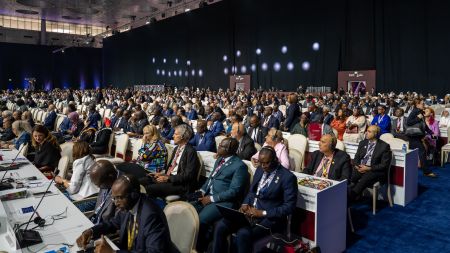
At the ITU Plenary Assembly in Doha, developing countries are calling for more say in AI developments and satellite services.
This week, the World Telecommunication Assembly of the International Telecommunication Union (ITU) is taking place in Doha, where important topics such as Artificial Intelligence (AI) and satellite services are on the agenda. Representatives from various countries, particularly from the Global South, are expressing their concerns about the unequal distribution of technologies and the need to be included in decision-making processes.
The ITU, a specialized agency of the United Nations, is tasked with promoting international cooperation in the field of telecommunications. This year, the focus is on the role of AI in global communication and the challenges arising from rapid technological development. The assembly provides a platform for exchanging ideas and strategies to improve digital infrastructure worldwide.
Demands of Developing Countries
Representatives from developing countries emphasize that they need more influence in shaping AI technologies and their applications. They argue that current decisions are often made by wealthier nations without considering the specific needs and challenges of countries in the Global South. These countries are calling for a fairer distribution of resources and knowledge to strengthen their own technological capacities.
A central concern is the creation of frameworks that enable developing countries to benefit from the advantages of AI. This includes access to training and educational opportunities in the field of digital technologies. Delegates are calling for international organizations and governments to collaborate to close these gaps and shape an inclusive digital future.
Technological Challenges and Opportunities
The discussions at the ITU assembly highlight the challenges associated with the implementation of AI technologies in various regions. Many developing countries struggle with inadequate infrastructure, making the adoption of new technologies difficult. At the same time, they see AI as an opportunity to advance their economic development and address social issues.
An example of the potential benefits of AI is the improvement of healthcare in rural areas. By using AI-powered diagnostic tools, medical professionals could work faster and more accurately, leading to better treatment outcomes. Delegates emphasize that such applications can only be successful if the affected countries are involved in the development process.
The ITU assembly will also address the role of satellite services in global communication. Satellites can provide an important connection for remote regions that lack access to conventional communication infrastructures. Countries in the South are demanding that their specific needs be better considered in the planning and implementation of such services.
The ITU assembly in Doha is a crucial moment for the international community to set the course for a fairer digital future. The demands of developing countries for greater participation and influence in AI development and satellite services are an important step towards a more inclusive global technology policy.
Ähnliche Artikel

Fable 5.2: AI Models Revolutionize Operating System Development
The new AI models Claude Fable 5.2 and Claude Mythos 5.2 from Anthropic set new standards in software development....

AI film "Sanxingdui: Future Past" flops in China
Despite intensive work and many screenings, interest in "Sanxingdui: Future Past" in China remains low. Reviews are pred...

Infineon and ZuriQ deepen partnership for quantum computers
Infineon and ZuriQ are joining forces to develop scalable quantum computers. The partnership combines semiconductor tech...

Neurotech Users: Brain Data Misused for AI Training
An investigation reveals that brain activities of Neurotech users are secretly used for training AIs....
comment Kommentare (0)
Noch keine Kommentare. Schreiben Sie den ersten!
Kommentar hinterlassen