
AI decodes Napoleon's encrypted letter
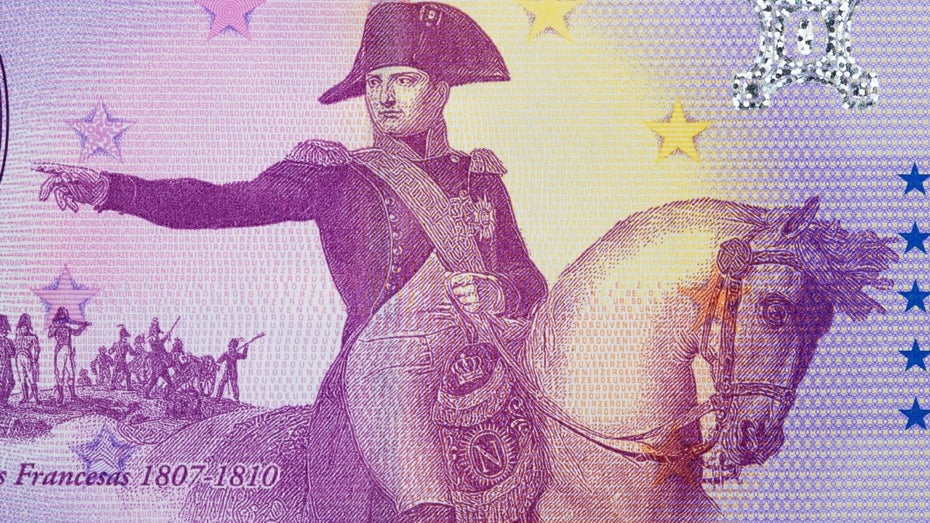
An AI has decoded a 217-year-old letter from Napoleon Bonaparte. The breakthrough was achieved after six hours of computing time.
An artificial intelligence has decrypted a letter from Napoleon Bonaparte that had been considered unreadable for 217 years. The developer behind this breakthrough let the AI model GPT-6 Astra compute for six hours. This decryption could provide new insights into the thought processes of the French emperor and expand the understanding of his political strategies.
The Encrypted Letter
The letter, written in 1809, was part of a correspondence that Napoleon had with one of his confidants. Historians had long tried to decipher the content of the document, but without success. The encryption technique used was too complex to crack with conventional methods. The decryption by the AI thus represents a significant advancement in historical research.
The AI used for the decryption is an advanced model from OpenAI, specifically designed for processing and analyzing texts. By employing machine learning, the model was able to recognize patterns in the encryption that had remained hidden from human historians. This demonstrates the potential of AI in the analysis of historical documents.
The Significance of the Decryption
The decryption of the letter could not only expand the understanding of Napoleon's personal communication but also open new perspectives on the emperor's political and military decisions. Historians are eager to find out what information the letter might contain and how this will influence the image of Napoleon. The possibility of analyzing historical documents using AI could revolutionize research in this area.
The discovery has also sparked interest in other unreadable documents that may be stored in archives. Experts are already discussing the application of similar technologies to other historical texts that have previously been considered inaccessible. The combination of AI and historical science could lead to a new era of historical discovery.
The decryption of the letter is not only a technical success but also a cultural milestone. It shows how modern technologies can help preserve and understand the heritage of past eras. The reactions from the scientific community are overwhelmingly positive, and many see this as an incentive to pursue further innovative approaches in historical research.
The results of the decryption are expected to be presented in an upcoming publication that will address the implications of the new findings. Historians and linguists are already working to analyze the contents of the letter and place them in the context of the time. The publication could reignite interest in Napoleon's life and his era.
The decryption of the letter from Napoleon Bonaparte is an example of how AI technologies can expand the boundaries of historical research. Advances in AI development enable the solving of complex problems that were previously considered insurmountable. The relevance of these technologies for historical science will continue to grow in the coming years.
Ähnliche Artikel
OpenAI presents GPT-6 Cyber for Cybersecurity
OpenAI has introduced GPT-6 Cyber, a model designed to enhance cybersecurity that has identified 81 Firefox vulnerabilit...

Documentary "Finding Connection" Illuminates AI Partnerships
The documentary "Finding Connection" shows how companion apps are taking on a new role in a society where listening has ...
Google blocks search function in schools rejecting AI
Google responds to resistance against AI in schools with new rules that restrict the search function....

Predictions on AI Development and Challenges
Dario Amodei discusses the gap between AI models and societal readiness in his new article....
comment Kommentare (0)
Noch keine Kommentare. Schreiben Sie den ersten!
Kommentar hinterlassen