
Meta Quest 3: Display supports up to 207 Hz
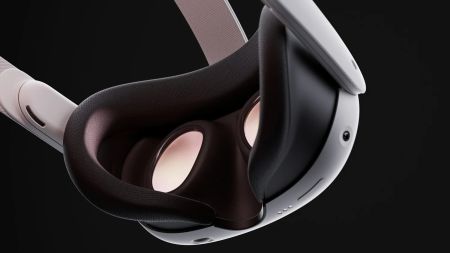
The Meta Quest 3 is receiving an update that supports refresh rates of up to 207 Hz. This innovation could be a response to the upcoming Steam Frame.
The Meta Quest 3, the latest VR headset from Meta, has received a significant update that increases the refresh rate to up to 207 Hz. This improvement represents a substantial advancement compared to the previous 120 Hz, which was already considered high. The increase in refresh rate could greatly enhance the user experience in virtual reality applications by providing smoother and more responsive graphics.
The decision to increase the refresh rate may also be a strategic response to the upcoming release of the Steam Frame, a new VR headset being developed by Valve. With competition in the VR market intensifying, it is becoming increasingly important for companies like Meta to offer innovative features to attract and retain users. Supporting refresh rates above 120 Hz could be a crucial factor in standing out from other products.
Technical Details and Benefits
The new refresh rate of up to 207 Hz allows developers to create VR content that is even more immersive and realistic. Higher refresh rates help reduce motion sickness, a common issue among VR users. By providing smoother representations of movements and interactions, the experience for users becomes more enjoyable and less strenuous.
In addition to the improved refresh rates, the Meta Quest 3 has also undergone other technical enhancements. These include optimized graphics and improved processing power, enabling the real-time rendering of more complex scenarios. These advancements are particularly important for developers looking to create immersive games and applications that fully leverage the capabilities of VR technology.
Market Analysis and Outlook
The VR industry has experienced remarkable growth in recent years, and the introduction of headsets with higher refresh rates could further amplify this trend. Analysts expect demand for VR technology to continue rising in the coming years, especially in the areas of gaming, education, and training. The Meta Quest 3 could play a key role in this development by offering users an enhanced experience.
Competition in the VR market is expected to intensify, particularly with the upcoming launch of the Steam Frame. Meta will need to focus on clearly communicating the advantages of the Meta Quest 3 to expand its user base and retain existing customers. The new features could be crucial in securing market shares in an increasingly competitive environment.
The Meta Quest 3 is already on the market and has received positive feedback from users and developers. Support for refresh rates of up to 207 Hz is expected to be implemented in upcoming software updates, which could further increase the headset's appeal. Developments in VR technology remain exciting and could revolutionize the way people interact with digital content.
Ähnliche Artikel
iOS 27 and Apple Intelligence: A Look at the iPhones
With iOS 27, Apple sets new requirements for users. Which iPhones will receive all features and what does this mean for ...

Activision takes action against cheat sellers
Activision has taken legal action against cheaters and forced a programmer to cease his sales....

EU Data Regulation: Challenges for Companies
Companies are under pressure to align their data strategies with EU requirements. The storage and access to data are inc...

Ikea Revises Matter Hardware for Sensors
Ikea is launching new, improved sensors and remote controls based on Matter technology....

comment Kommentare (0)
Noch keine Kommentare. Schreiben Sie den ersten!
Kommentar hinterlassen