











NASA sends telescope into space to discover new planets
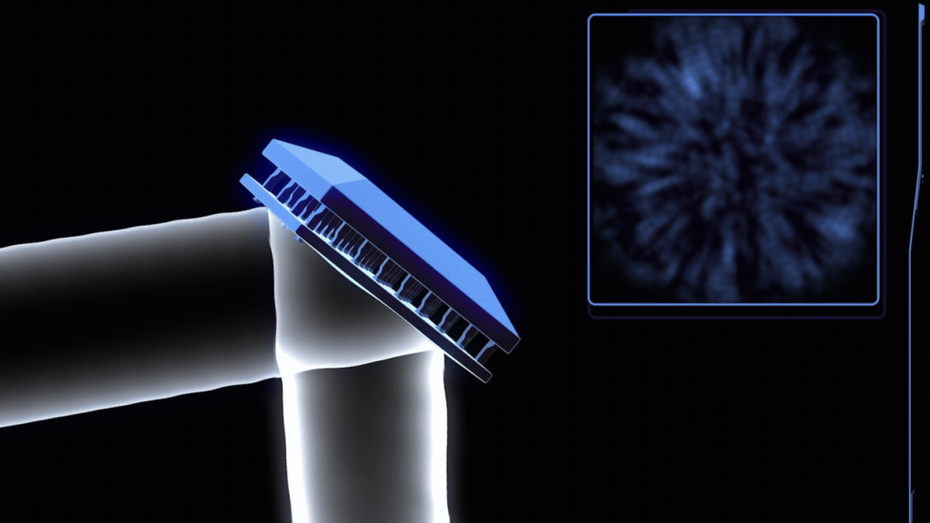
The Nancy Grace Roman Space Telescope will be equipped with an active coronagraph to block out starlight and make new planets visible.
The NASA plans to launch the Nancy Grace Roman Space Telescope, which is set to serve as a groundbreaking instrument for discovering new planets in the universe. This telescope will be the first of its kind to employ an active coronagraph to block out unwanted starlight. This will enhance the view of planets that are located near bright stars.
The active coronagraph is an innovative technology that allows the telescope to block the light from stars while keeping the light from nearby planets visible. This method could significantly facilitate the discovery of exoplanets, especially those located in habitable zones where conditions for life may exist.
Technological Innovations of the Telescope
The Nancy Grace Roman Space Telescope will be equipped with state-of-the-art instruments that pursue a variety of scientific goals. In addition to searching for new planets, the telescope will also be used to study the structure and development of galaxies. The combination of an active coronagraph and powerful cameras will enable scientists to gain deeper insights into the universe.
Another advantage of the telescope is its ability to capture light at different wavelengths. This will help astronomers analyze the chemical composition of planetary atmospheres and identify potential signs of life. The data that the telescope will collect could be crucial for understanding the formation of planetary systems.
The mission of the Nancy Grace Roman Space Telescope is part of a larger NASA program aimed at intensifying the search for Earth-like planets. NASA has made significant progress in discovering exoplanets in recent years, and the new telescope will further advance these efforts.
Launch Date and Mission Expectations
The launch of the Nancy Grace Roman Space Telescope is planned for the year 2027. NASA has already begun preparations for the mission, including the development and testing of the necessary technologies. Scientists are optimistic that the telescope will be able to discover a variety of new planets that have remained undetected so far.
The mission is expected to last several years, during which the telescope will continuously collect and analyze data. The results of this mission could not only expand our understanding of the universe but also raise new questions about the existence of life beyond Earth. The scientific community eagerly anticipates the first results from the telescope.
The Nancy Grace Roman Space Telescope will play a key role in future astronomy and could help answer some of humanity's greatest questions. The combination of innovative technology and a clear scientific goal makes this mission one of NASA's most exciting projects in the coming years.
Ähnliche Artikel
IBM Achieves Breakthrough in Nuclear Fusion with Quantum Computers
IBM has demonstrated a significant proof of concept for nuclear fusion with a quantum-centric supercomputer....

Ukraine develops electric motorcycle for frontline use
Ukraine has developed a silent electric motorcycle for frontline use, equipped with a range extender....

Future of Data Storage: New Technologies in Focus
Innovative storage media are set to secure data archives for centuries. The podcast Bit-Rauschen highlights current deve...

Optimize Thermal Storage for Data Center Waste Heat
Thermal storage enables flexible use of waste heat from data centers and creates new opportunities for heating networks....

comment Kommentare (0)
Noch keine Kommentare. Schreiben Sie den ersten!
Kommentar hinterlassen