




North Korean hackers use Microsoft phishing
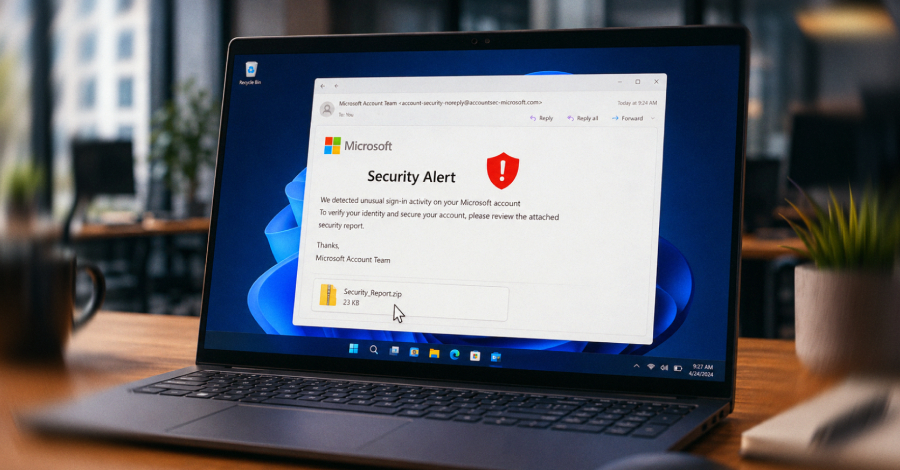
The hacker group ScarCruft has used phishing emails to spread NarwhalRAT malware.
The North Korean hacker group ScarCruft, also known as APT37, has recently employed a new tactic for spreading malware. According to the Genians Security Center (GSC), the attackers are using fake Microsoft account security notifications to deceive unsuspecting users. These phishing messages are designed to create concern about potential security issues and prompt recipients to click on malicious links.
The emails sent as part of this campaign contain a message that pretends to be a security alert from Microsoft. The attackers use this ruse to gain the trust of users and lead them to disclose their personal information or download malware. The use of fake security notifications is a common method among cybercriminals to legitimize their attacks.
Details on the NarwhalRAT Malware
The malware being spread in these phishing attacks is called NarwhalRAT. This Remote Access Trojan (RAT) allows attackers to take control of the infected systems. After installation, NarwhalRAT can perform a variety of malicious activities, including stealing sensitive information, recording keystrokes, and monitoring webcam streams.
The attackers behind ScarCruft are known for their sophisticated techniques and their ability to adapt to different target audiences. The use of Microsoft as a disguise is particularly effective, as many users trust the emails due to the brand's recognition and credibility. This makes it easier for the attackers to achieve their goals.
Response from the Security Community
The security community has responded to these new phishing attacks by issuing warnings to inform users about the dangers of such emails. Experts advise being particularly cautious with unexpected emails that contain security alerts. It is recommended not to click on links in such emails and instead visit the official Microsoft website directly to check the status of the account.
Additionally, security researchers have emphasized the importance of keeping security software up to date and performing regular updates. The threat posed by malware like NarwhalRAT demonstrates that cybercrime is an ongoing challenge affecting both individuals and businesses. The attacks by ScarCruft are an example of the persistent danger posed by state-sponsored hacker groups.
The Genians Security Center has also pointed out that the attacks target not only individuals but also businesses and organizations. The spread of NarwhalRAT could have significant implications for data security and privacy, especially in sensitive sectors such as healthcare and finance.
The discovery of this phishing campaign underscores the need for companies to provide cybersecurity training for their employees. A better understanding of the risks and the ability to recognize phishing attempts can help reduce the likelihood of a successful attack. The security situation remains tense, and the threat from groups like ScarCruft remains high.
Ähnliche Artikel

New Zero-Day Exploit for Windows Discovered
Security researchers have released another zero-day exploit for Windows that affects Windows Defender....

Zoom: Zero-click vulnerability enables code smuggling
IT researchers have discovered zero-click vulnerabilities in Zoom that allow malicious code to be injected into other us...

Fake Chrome VPN Extensions jeopardize user data
Over 737 fake VPN extensions in the Chrome Web Store redirect data through insecure proxies....

Digital Competencies: Companies See a Significant Need for Improvement
A recent TÜV study shows that 56 percent of companies in Germany see a significant need for improvement in digital skill...

comment Kommentare (0)
Noch keine Kommentare. Schreiben Sie den ersten!
Kommentar hinterlassen