
Risks of Microsoft 365 Without Backup
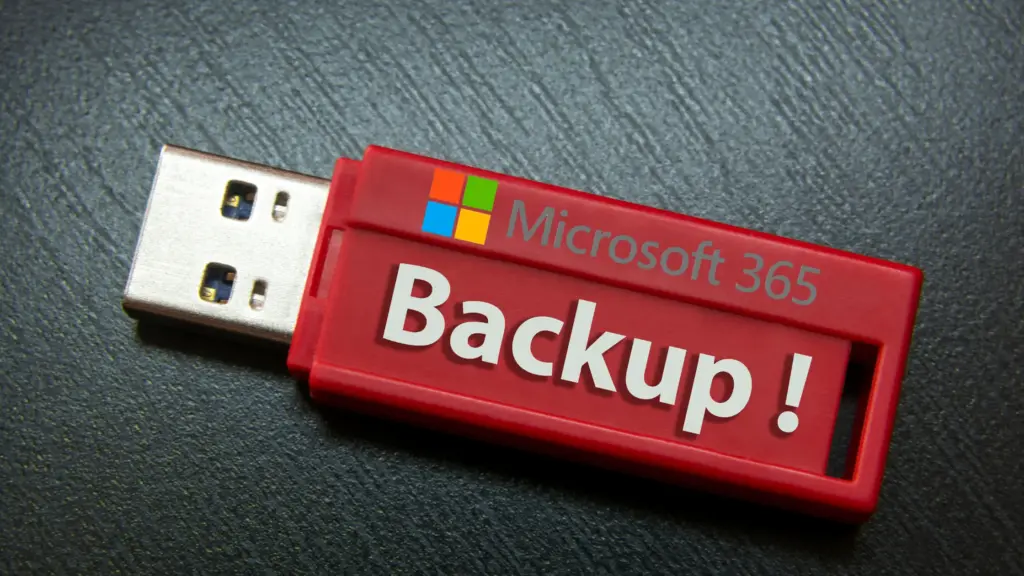
Companies often rely on Microsoft 365 without considering backup strategies. This poses significant risks to data security.
Microsoft 365 has established itself as a central work platform for many companies in recent years. The use of Exchange Online for emails, OneDrive and SharePoint for document storage, as well as Microsoft Teams for daily communication offers numerous advantages. This platform enables high availability and location-independent work, which promotes modern teamwork. However, despite these advantages, there is a dangerous misconception that many companies hold: They believe that their data is automatically fully backed up by Microsoft.
The reality, however, is that Microsoft 365 does not replace a professional backup. Companies that rely solely on the standard features of the platform expose themselves to unnecessary risks. Microsoft protects the platform and invests billions annually in the security of its data centers to minimize hardware failures and other technical risks. Nevertheless, the responsibility for the long-term backup and recovery of corporate data lies with the customer.
Shared Responsibility Model
The Shared Responsibility Model is a central concept that describes the division of responsibilities between Microsoft and the users. Microsoft provides the infrastructure and ensures its operation, while customers are responsible for backing up their own data. This means that in the event of data loss, whether due to accidental deletion, cyberattacks, or misconfigurations, Microsoft may not always be able to help.
The most common causes of data loss in Microsoft 365 are often everyday mistakes. One example is the accidental deletion of files. When an employee deletes a folder in SharePoint or OneDrive, the mistake may not be noticed immediately. It may only be weeks or months later that it becomes apparent that important information is missing. Depending on the retention policies, this data may already be permanently deleted, which is particularly critical for project documents or contracts.
Another risk is the deletion of user accounts. When an employee leaves the company, their user account is often deactivated or deleted. This can lead to the loss of emails, calendars, Teams data, and personal files as well. Without a separate backup, there is a danger that important business information may be irretrievably lost.
Cyberattacks and Ransomware
Cybercrime has become one of the biggest risks for companies of all sizes. Modern ransomware attacks no longer only target local servers but can also affect cloud services like Microsoft 365. When a company falls victim to such an attack, data can be encrypted and made inaccessible. In such cases, it is crucial to have a backup to restore the data.
The dependence on Microsoft 365 without adequate backup strategies can have serious consequences for companies. The notion that the cloud alone provides sufficient protection is misleading. Companies must be aware that they are responsible for the security of their data and should take appropriate measures to protect themselves from data loss.
The necessity of a professional backup is underscored by the increasing number of cyberattacks and frequent human errors. Therefore, companies relying on Microsoft 365 should engage intensively in implementing backup solutions to secure their data in the long term.
Ähnliche Artikel

EU Commissioner criticizes tech giants for migration crisis
Henna Virkkunen blames Meta and TikTok for the migration crisis. Misinformation has contributed to the crossing of tens ...
Microsoft raises prices for Windows licenses
PC manufacturers will have to pay higher prices for Windows licenses, putting further pressure on profit margins....

New Relic launches support program for startups
New Relic has launched a new program that offers startups free access to the observability platform....
D-Link Reduces Prices for Smart Managed Switches
D-Link has reduced the list prices for two series of Smart Managed Switches by up to 25 percent....

comment Kommentare (0)
Noch keine Kommentare. Schreiben Sie den ersten!
Kommentar hinterlassen