
Router Security: BSI Provides Important Recommendations
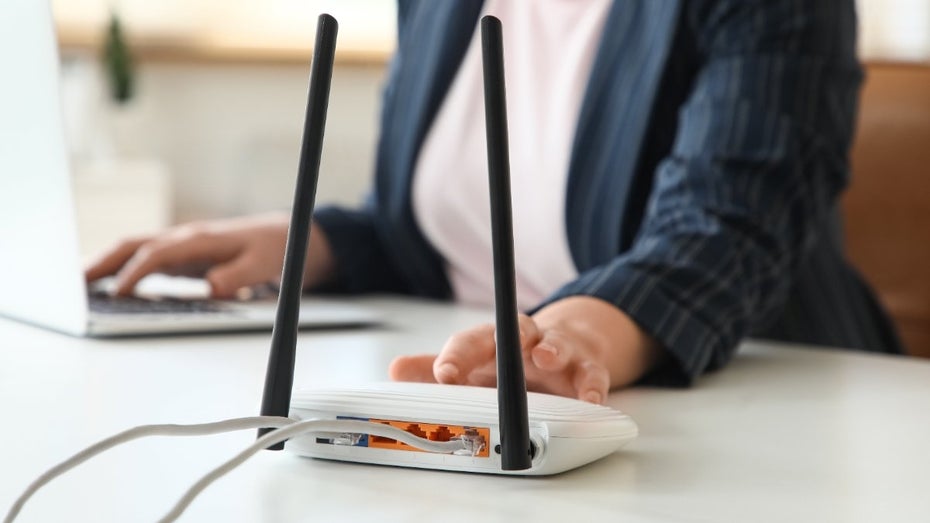
The BSI offers tips for securing routers against cyber attacks. Users should make important settings.
In an increasingly digitalized world, the security of home networks is of utmost importance. The Federal Office for Information Security (BSI) has therefore published a series of recommendations to help users effectively secure their routers against cyberattacks. These measures are particularly relevant for individuals who are either setting up a new router or looking to enhance the security of their existing device.
One of the first recommendations from the BSI is to change the default password. Many routers come with preset passwords that are easy to guess. Users should therefore choose a strong, unique password that consists of a combination of letters, numbers, and special characters. This makes it more difficult for attackers to gain unauthorized access to the network.
Regularly update firmware
Another important point is the regular updating of router firmware. Manufacturers frequently release updates to close security gaps and improve performance. The BSI recommends regularly checking and updating the router's firmware if necessary. This can usually be done through the router's user interface.
Additionally, the BSI advises switching the Wi-Fi encryption to WPA3, if supported by the router. WPA3 offers improved security features compared to older encryption standards like WPA2. Users should ensure that Wi-Fi encryption is enabled and that the network does not remain unsecured.
The BSI also points out that the SSID (Service Set Identifier) of the Wi-Fi network should not contain the name of the router or the household. A neutral SSID makes it more difficult for potential attackers to gather information about the network. Furthermore, the SSID should not be publicly visible to reduce the attack surface.
Disable unnecessary features
Another aspect of router security is the disabling of unnecessary features. Many routers offer a variety of functions that are not always needed. The BSI recommends disabling features like remote management or WPS (Wi-Fi Protected Setup) when they are not in use. These features can pose potential security risks if not properly configured.
Moreover, users should ensure that the network is only accessible to authorized devices. The BSI recommends enabling MAC address filtering to allow only specific devices to access the network. This can help prevent unauthorized access and further enhance the security of the network.
Finally, it is advisable to set up a guest network when visitors need internet access. A separate guest network protects the main network from potential threats posed by external devices. The BSI recommends choosing a secure password for the guest network as well and restricting access rights accordingly.
The BSI's recommendations are part of a comprehensive strategy to improve cybersecurity in Germany. Given the increasing number of cyberattacks, it is essential for users to take proactive measures to protect their digital devices and networks.
Ähnliche Artikel

Protection for M365 and Entra ID: iX Workshop
A new workshop provides practical strategies for protecting Microsoft 365 and Entra ID....

Ivanti expands Neurons platform with Predictive Remediation
Ivanti has enhanced its Neurons platform with predictive remediation features to optimize endpoint management....
New Cyber Attacks on European Governments
Cyber attacks on government and diplomatic organizations in Europe are increasing. The HOOKEDGE backdoor has been identi...
Plusserver launches managed Proxmox cloud
The Cologne-based provider Plusserver offers a private cloud based on Proxmox, operated in German data centers....

comment Kommentare (0)
Noch keine Kommentare. Schreiben Sie den ersten!
Kommentar hinterlassen