

Russia's recycling rocket delayed until 2030
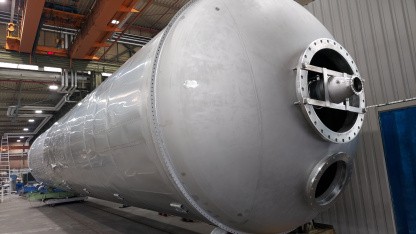
Russia has announced that the development of its reusable rocket will not be completed before 2030.
Russia has announced that the development of its planned reusable rocket, which was supposed to be a serious competitor to SpaceX, will be significantly delayed. Originally announced in 2020, completion is now not expected before 2030. This delay raises questions about Russia's competitiveness in the field of commercial spaceflight.
The Russian space agency Roskosmos had grand ambitions to revolutionize the commercial space market with the development of a recycling rocket. The idea behind the reusable rocket is to significantly reduce the costs of accessing space and to increase the efficiency of space missions. SpaceX has already proven with its Falcon 9 rocket that reusable technologies can be successfully implemented in the commercial sector.
Delays in the Russian space industry are not new. In recent years, there have been repeated reports of technical difficulties, financial bottlenecks, and management problems within Roskosmos. These factors have contributed to many projects falling behind schedule. The development of the new rocket is just one of many examples of the challenges facing Russian spaceflight.
Technological Challenges and Financial Bottlenecks
The technical challenges in developing a reusable rocket are significant. Engineers must develop solutions for the rocket's return to Earth that are both safe and cost-effective. These technologies require extensive testing and development, which take time and resources. Roskosmos has struggled in the past to secure the necessary funding for such projects, further slowing progress.
Another aspect influencing the development of the recycling rocket is international competition. SpaceX has not only perfected the technology for reusability but has also gained a strong market position. The successes of SpaceX have put pressure on other companies and nations, including Russia, to accelerate their own programs. Delays in the Russian rocket could lead to Russia falling further behind in the international space market.
Market and Future of Spaceflight
The market for commercial spaceflight is growing rapidly, and many companies are investing in new technologies and rockets. The demand for satellite launches and other space missions is steadily increasing, which raises the pressure on Roskosmos to remain competitive. The delay of the recycling rocket could result in Russia losing significant market shares to other nations and private companies.
The development of the recycling rocket is not only a technical challenge for Russia but also a matter of national identity and technological progress. Russian spaceflight has a long history, and many see the need to continue this tradition and compete internationally. However, the delays could undermine confidence in the Russian space industry and complicate collaboration with international partners.
The announcement from Roskosmos that the recycling rocket will not be ready for use before 2030 is another setback for Russian spaceflight. While other nations and companies are making progress, Russia faces the challenge of realizing its own ambitions while keeping pace with developments in global spaceflight.
Ähnliche Artikel

Automotive industry fights against intelligence service reform
The automotive industry criticizes the access to telemetry data by intelligence services and warns against data retentio...

Windows 11 Update KB5121003 Causes Crashes
The Windows 11 Update KB5121003 is causing crashes and restarts for users. A problematic driver could be the cause....

New CRISPR Method Enables Sex Reversal in Mice
Scientists have developed an innovative CRISPR technique that allows for the removal of the Y chromosome in mice, creati...

Impact Labs: Workshops for Women in IT Launch
The Impact Labs offer a series of workshops for women in IT professions, taking place in October and December 2026....

comment Kommentare (0)
Noch keine Kommentare. Schreiben Sie den ersten!
Kommentar hinterlassen