
Serious Linux Bug Allows Root Access
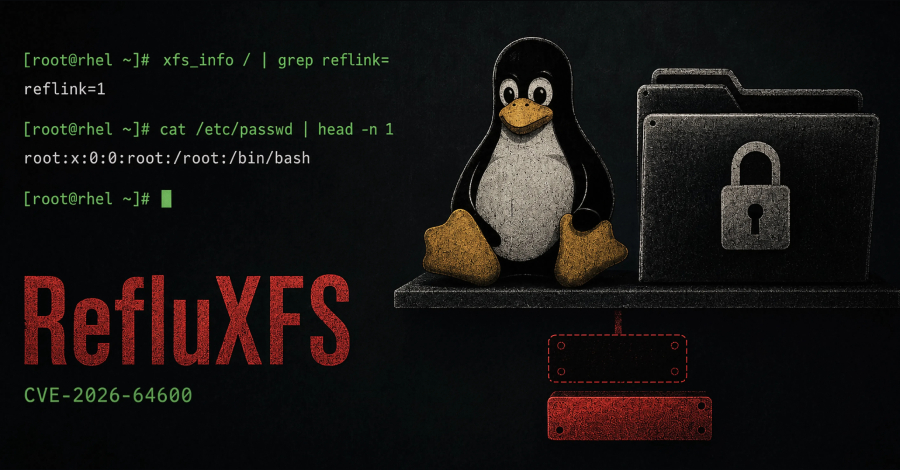
A newly discovered bug in RefluXFS allows unprivileged users to gain root privileges. Affected are standard installations of RHEL and its derivatives.
A critical security flaw in the Linux kernel, known as RefluXFS, was disclosed on July 22, 2026, and carries the identifier CVE-2026-64600. This flaw allows unprivileged local users to overwrite root-owned files on an XFS filesystem, thereby gaining persistent root access. The security firm Qualys has identified the vulnerability and warns of the potential dangers posed by this flaw.
Qualys's analysis shows that standard installations of Red Hat Enterprise Linux (RHEL) and its derivatives, including Fedora Server and Amazon Linux, may meet the conditions for exploiting this vulnerability. This means that systems that are not properly configured are at increased risk. The ability to gain root privileges could have serious consequences for the integrity and security of the affected systems.
Details of the Vulnerability and Its Impact
The RefluXFS vulnerability is based on a flaw in the XFS filesystem, which is used in many Linux distributions. An unprivileged user can gain root privileges through careful timing and manipulation of files, leading to complete access to the system. This type of attack could allow attackers to execute malicious code, steal data, or compromise the system.
Qualys has described the vulnerability in a detailed analysis and outlined the specific conditions under which exploitation is possible. The discovery of this vulnerability is particularly concerning as it occurs in widely used Linux distributions that are deployed in many enterprise environments. The fact that unprivileged users can exploit this vulnerability significantly increases the risk for businesses.
The security community has already reacted to the discovery, and patches and updates for the affected systems are expected to be provided in the near future. Administrators are strongly urged to review their systems and ensure they are up to date to prevent potential attacks. A swift response to such security incidents is crucial to maintaining the integrity of the systems.
Reactions and Recommendations
Reactions to the discovery of the RefluXFS vulnerability are mixed. While some experts emphasize the seriousness of the situation, there are also voices pointing out that such vulnerabilities are inherent in the nature of complex software products. The discussion about the security of open-source software is reignited by this incident, as many companies rely on Linux-based systems.
The security firm Qualys has recommended that all users of RHEL, Fedora Server, and Amazon Linux promptly update their systems to the latest versions as soon as the patches are available. Implementing security policies and conducting regular audits are also crucial to ensuring the security of the systems. The community will continue to closely monitor how developers respond to this vulnerability and what measures are taken to prevent similar issues in the future.
The RefluXFS vulnerability is another example of the challenges faced by the IT security industry. The discovery of such flaws requires constant vigilance and rapid responses to ensure the security of systems. The vulnerability CVE-2026-64600 could have far-reaching impacts on many organizations that rely on Linux-based systems.
Ähnliche Artikel

OpenAI presents ChatGPT 5.6 Cyber for Professionals
OpenAI has released the ChatGPT 5.6 Cyber model, specifically designed for security research....
New phishing method disguises itself as a Windows blue screen
Security researchers have discovered a new phishing method that uses fake Windows blue screens to lure users into execut...

AI Bots Take Over Hacking Attacks
A new report shows that AI is increasingly being used for hacking attacks. IT experts warn of new threats....

Security Vulnerability at GitHub: CI Workflow Compromised
A security vulnerability at GitHub allows for the compromise of CI workflow secrets. Novee Security presented the findin...

comment Kommentare (0)
Noch keine Kommentare. Schreiben Sie den ersten!
Kommentar hinterlassen