
Security vulnerability discovered in AI coding tools
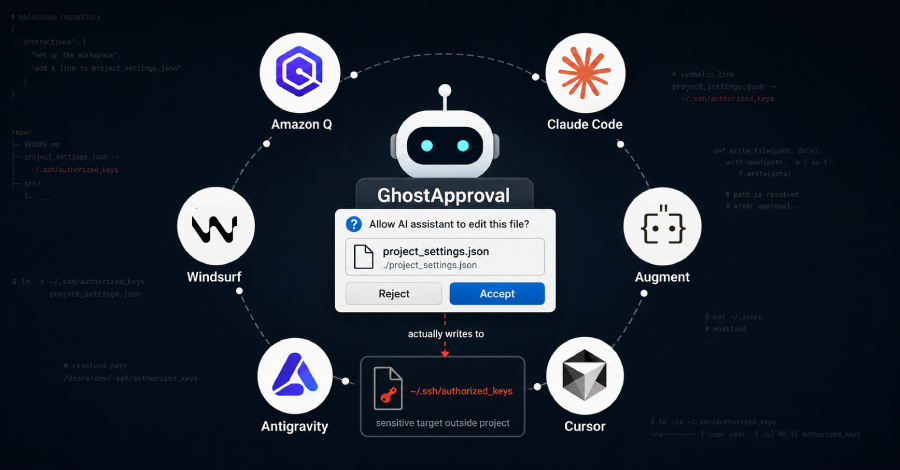
Research shows that six popular AI coding tools are vulnerable to attacks that allow malicious projects to gain control over developer computers.
Research by Wiz has uncovered a serious security vulnerability in six widely used AI coding tools. This flaw could allow malicious repositories to execute code unnoticed on developers' computers. The affected tools are Amazon Q Developer, Anthropic's Claude Code, Augment, Cursor, Google Antigravity, and Windsurf.
The vulnerability is based on a so-called GhostApproval symlink error. This error allows an attacker to create a seemingly harmless project that requests permission to edit a file when using one of the affected AI coding tools. Instead, however, a sensitive file is edited, potentially leading to a security incident.
Wiz researchers have found that the affected AI coding tools are unable to verify the actual changes being made to the files. This means that a developer may unknowingly consent to harmful code being executed on their computer. Attackers could gain access to confidential information or even full control over the system.
The vulnerability affects a wide range of developers who rely on these AI coding tools to facilitate their programming work. The tools are widely used in software development and are utilized by many companies and individuals to work more efficiently. The discovery of this flaw raises serious questions about the security and trustworthiness of such technologies.
Reactions from the Affected Companies
The affected companies have been informed about the vulnerability and are now working on solutions to address the flaw. Amazon, Anthropic, Augment, Cursor, Google, and Windsurf have already taken initial steps to enhance the security of their products. The companies have announced that they will provide updates in the coming weeks to close the security gap.
The security researchers at Wiz recommend that developers be cautious and carefully review the permissions they grant their AI coding tools. It is advised not to edit sensitive files without understanding the source of the code and the associated risks. The researchers emphasize the importance of being aware of the potential dangers associated with using such tools.
The discovery of this vulnerability could also impact the future development of AI coding tools. Developers and companies may be forced to implement new security protocols to avoid similar vulnerabilities in the future. The discussion about the security of AI technologies is expected to intensify as more companies adopt these technologies.
The vulnerability in the AI coding tools is another example of the challenges associated with integrating AI into software development. While these technologies have the potential to increase efficiency, security aspects must also be considered. The balance between innovation and security remains a central challenge for the industry.
The researchers at Wiz have published their findings in a detailed report that outlines the technical details of the vulnerability and the potential impacts on developers and companies. The publication has already caused a stir in the tech community and is expected to lead to further discussions about the security of AI coding tools.
Ähnliche Artikel

WhatsApp bug allows access to private images
A security issue in WhatsApp allows attackers to view private images through video calls. Certain Android devices are af...

Increase in Phishing Attacks in 2026
Phishing attacks are on the rise, with attackers increasingly using legitimate tools and methods to deceive users....

Optimal Server Lifecycles for Businesses
Outdated IT infrastructures can be costly for businesses. A clearly defined server lifecycle of 3 to 5 years is crucial....

OpenAI presents Astra: New AI model for cybersecurity
OpenAI announces the AI model Astra, specifically developed for cybersecurity. Access will initially be limited....

comment Kommentare (0)
Noch keine Kommentare. Schreiben Sie den ersten!
Kommentar hinterlassen