
Water Cooling for PCs and Servers: Efficient Cooling
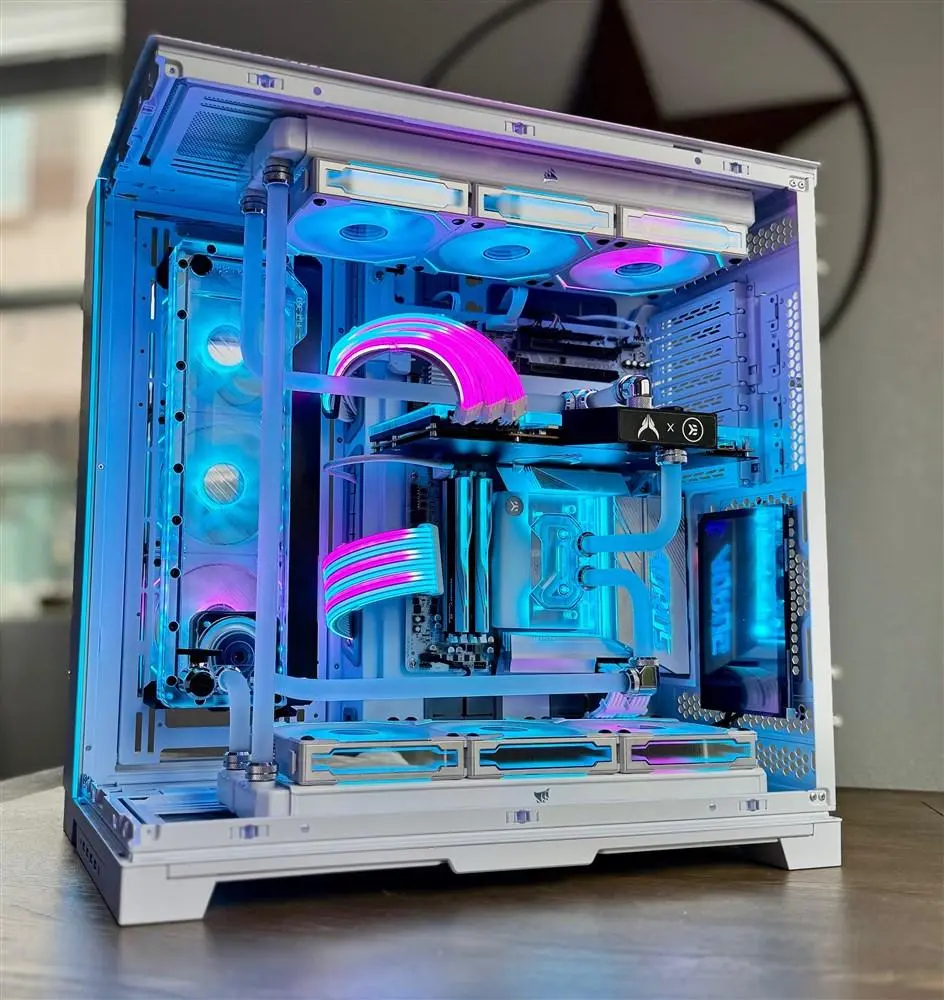
Water cooling is gaining importance for PCs and servers. It offers better cooling performance and quiet operation, especially for gamers and businesses.
Water cooling for PCs and servers has gained increasing importance in recent years. With the continuous development of modern processors and graphics cards that generate enormous amounts of heat, reliable cooling is essential. While traditional air coolers are sufficient for many systems, water cooling offers significant advantages in terms of cooling performance and noise generation.
Especially gamers, content creators, and companies that rely on powerful servers benefit from the advantages of water cooling. This technology ensures that the hardware remains stable even under heavy load and extends the lifespan of the components. The constant temperatures achieved through water cooling contribute to reducing the likelihood of failure.
How Water Cooling Works
The operation of water cooling for PCs and servers is based on a closed-loop system. The water block, which sits directly on the CPU or GPU, absorbs the generated heat. A powerful pump transports the heated coolant to the radiator, where the heat is dissipated to the surrounding air with the help of fans. The cooled water then flows back to the water block, and this cycle repeats continuously.
Through this efficient heat dissipation, processors and graphics cards remain significantly cooler even during intensive applications. This not only leads to higher stability but also enables better performance, especially in gaming PCs and workstations. The ability to overclock the hardware is also favored by the improved cooling.
Advantages and Disadvantages of Water Cooling
The advantages of water cooling are manifold. Among the most important are lower temperatures even under high load, quieter operation due to fewer spinning fans, and a longer lifespan of the hardware. Additionally, modern cooling blocks often offer an appealing look that can be enhanced with RGB lighting. These aspects make water cooling particularly attractive for users who value performance and design.
However, there are also some disadvantages that should be considered when deciding on water cooling. High-quality water cooling systems are generally more expensive than conventional air coolers. Furthermore, installing a custom-built water cooling system requires a certain level of experience. In custom systems, it is also necessary to regularly check and possibly change the coolant.
For users seeking a low-maintenance solution, there is the option of using all-in-one water coolers (AIO). These systems are easier to install and require less regular maintenance, but may not offer the same performance as custom-built solutions. The choice between AIO and custom water cooling ultimately depends on individual requirements and the desired level of customization.
The development of water cooling technology has made it an attractive option not only for gamers and content creators but also for companies and server operators. The efficiency and advantages in terms of noise generation and cooling performance make it a preferred choice in many areas of computer technology.
Ähnliche Artikel

Maincubes opens first construction phase of FRA03
Maincubes has commissioned the first phase of its new data center FRA03 in Frankfurt. The second expansion stage is plan...

Google presents the Pixel 11 smartphones
The new Pixel 11 family from Google brings numerous technical upgrades and new models to the market....
Direct Current Grids: The Future of Energy Supply
Direct current grids are gaining importance due to digitalization and renewable energies. New technologies support their...

Google's Pixel 11 Series: Minor Updates, High Prices
Google's new Pixel 11 series brings only a few innovations and higher prices for the models. The cheaper variants are be...

comment Kommentare (0)
Noch keine Kommentare. Schreiben Sie den ersten!
Kommentar hinterlassen