
GeoNetwork fixes critical security vulnerabilities
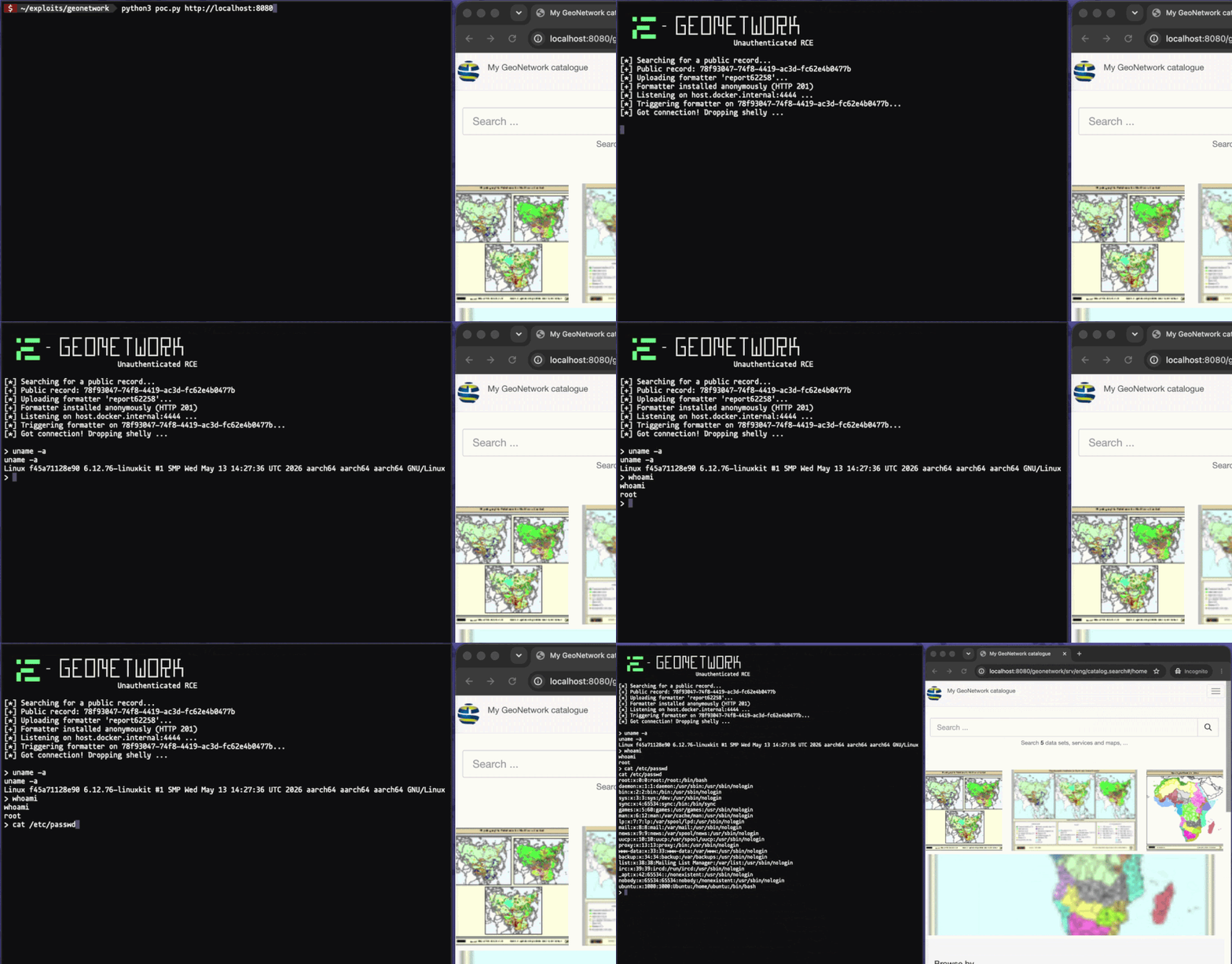
GeoNetwork has fixed two security vulnerabilities that could lead to unauthorized remote code execution.
GeoNetwork, an open-source project for managing geospatial metadata, recently addressed two critical security vulnerabilities that allowed attackers to perform unauthorized remote code execution (RCE). These vulnerabilities particularly affect the backend systems of many government and agency geoportals that are based on GeoNetwork. The security updates were released on July 8, 2026, and the details of the vulnerabilities were disclosed on August 31, 2026.
The two identified vulnerabilities can be combined to enable unauthorized code execution. This poses a significant risk to the integrity and security of the systems that rely on GeoNetwork. The vulnerabilities have been classified as critical because they can be exploited without authentication, meaning that attackers do not need access to the systems to exploit the vulnerabilities.
Details of the Security Updates
Versions 4.4.12 and 4.2.17 of GeoNetwork contain the necessary patches to address these security vulnerabilities. The project's developers have emphasized that it is of utmost importance for all users of the software to promptly install the latest versions to protect their systems. The release of the security updates follows a comprehensive review of the software aimed at ensuring user security.
GeoNetwork was originally initiated by the Food and Agriculture Organization of the United Nations (FAO) and has since become an important tool for managing geospatial data. The software is used by numerous government agencies and organizations worldwide to create and manage geospatial data catalogs. The discovery of these vulnerabilities has drawn attention to the need for continuous security review and improvement in software development.
Community Reactions
The reactions to the announcement of the security vulnerabilities have been mixed. While some users are concerned about the potential risks associated with using the software, others have praised the quick response of the GeoNetwork team. The developers have emphasized that they are aware of the responsibility that comes with providing such software and that they are continuously working to improve security.
The security vulnerabilities have been extensively discussed in the community, with many users sharing their experiences and concerns in online forums and social media. Some experts have pointed out that the discovery of such vulnerabilities in open-source software is not unusual, as the transparency of software development brings both advantages and disadvantages.
The GeoNetwork developers have also emphasized that they will continue to work closely with the community to identify and address future security issues. The release of the security updates is a step in this direction and demonstrates the team's commitment to user security.
The vulnerabilities in GeoNetwork are an example of the challenges associated with managing open-source software. While the software offers many benefits, users must also be mindful of the potential risks and ensure that they regularly install updates to protect their systems.
GeoNetwork has established itself as an indispensable tool for managing geospatial data and is used by many organizations worldwide. The recent security updates are an important step in ensuring the integrity and security of these systems.
Ähnliche Artikel

Governance Structures for Digital Assistants in Companies
Only one third of German companies have mature governance structures for digital assistants. The need for clear rules is...
Change in the Enterprise Software Economy
The role of databases in enterprise software is changing due to agentic AI....
Underground Data Centers in Germany
K+S and Accenture are planning underground data centers in former potash and salt mines to address the challenges of the...

Secure Management of File Servers in 2026
Managing file servers remains a challenge. Best practices help ensure secure access....

comment Kommentare (0)
Noch keine Kommentare. Schreiben Sie den ersten!
Kommentar hinterlassen