


Nancy-Grace-Roman-Telescope launches for exoplanet search
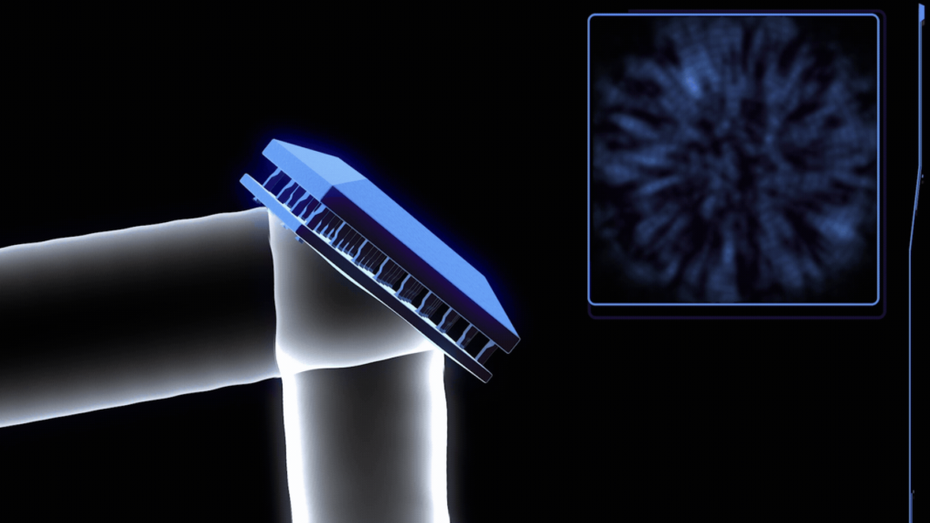
The Nancy-Grace-Roman space telescope is set to launch on August 30, 2026, and aims to discover 100,000 exoplanets using an active coronagraph.
On August 30, 2026, the Nancy Grace Roman Space Telescope (NGRST) will launch into space to revolutionize the search for exoplanets. The telescope, named after astronomer Nancy Grace Roman, will be equipped with innovative technology that allows it to filter out unwanted starlight. This technique, known as an active coronagraph, could enable scientists to observe a variety of undiscovered planets.
The NGRST represents a significant step in astronomy, as it has the ability to block light from distant stars while simultaneously capturing light from planets located nearby. This method could facilitate the discovery of up to 100,000 exoplanets that have remained hidden until now. The mission is led by NASA and is part of a broader program to explore the universe.
Technology and Mission
The active coronagraph of the Nancy Grace Roman Telescope is a key technology that enables the telescope to reduce the brightness of stars in order to isolate the fainter light signals from planets. This technique could significantly enhance the sensitivity of the telescope and allow it to observe planets that are located in the habitable zone of their stars. These zones are areas where conditions may exist that could support life.
The telescope will also be equipped with a large field of view, allowing it to observe multiple stars simultaneously. This is particularly important, as many exoplanets exist in systems that encompass multiple stars. By simultaneously observing several stars, the NGRST can operate more efficiently and identify a greater number of planets.
The mission of the Nancy Grace Roman Telescope is expected to last several years. During this time, astronomers and scientists will analyze the collected data to learn more about the characteristics and composition of the discovered exoplanets. This information could be crucial in answering the question of whether life exists beyond Earth.
Expectations and Impact
Expectations for the Nancy Grace Roman Telescope are high, as it has the potential to significantly expand astronomy and our understanding of the universe. The discovery of new exoplanets could not only enhance our knowledge of the diversity of planets in the universe but also provide new insights into the formation of planetary systems. Scientists hope that the telescope will also discover planets that exhibit conditions similar to those of Earth.
The mission will also contribute to the advancement of technology for future space missions. The advancements achieved with the active coronagraph could be applied in future projects aimed at gaining even deeper insights into the universe. NASA is already planning additional missions that could be based on the findings of the NGRST.
The Nancy Grace Roman Telescope is supported by an international team of scientists and engineers involved in the development and operation of the telescope. Collaboration between various institutions and countries is an important aspect of this mission, as it fosters the exchange of knowledge and resources. The first results of the mission are eagerly anticipated and could have a lasting impact on astronomy.
The Nancy Grace Roman Space Telescope will launch on August 30, 2026.
Ähnliche Artikel
Omarchy Linux: New Desktop and Foundation Established
Omarchy Linux presents a comprehensive desktop environment with version 4.0 and receives a foundation with 10 million US...

Noise protection in data centers: Early planning is crucial
Integrating noise protection into the planning of data centers can avoid conflicts and facilitate approval processes....

Ikea and Xbox present new gamer furniture
At Gamescom 2026, a new furniture collection from Ikea and Xbox was unveiled, stylishly integrating gaming equipment int...
FritzBoxes Receive HD Telephony Update
A new lab update for FritzBoxes brings HD telephony and optimizations for several models....

comment Kommentare (0)
Noch keine Kommentare. Schreiben Sie den ersten!
Kommentar hinterlassen