
OpenAI and the Future of Mathematics with AI
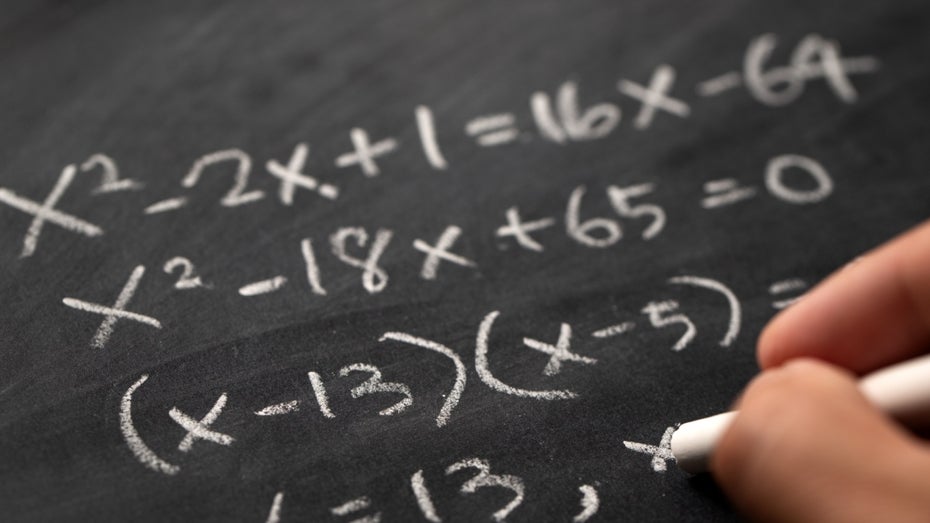
OpenAI plans to solve 400 mathematics problems with AI, which is met with mixed reactions in the academic community.
OpenAI has announced that it plans to solve around 400 math problems using Artificial Intelligence. This initiative is seen as a potential breakthrough in mathematical research, as AI is capable of tackling complex problems faster and more efficiently than human mathematicians. However, the idea of using AI in mathematics has also led to a divided opinion within the academic community.
Some academics welcome the advancements that can be achieved through the use of AI. They argue that AI can not only increase efficiency but also provide new perspectives on old problems. The possibility that AI may be able to find solutions that humans might overlook is seen as a significant advantage. This viewpoint is supported by the hope that AI could revolutionize mathematical research.
Resistance in the Academic Community
On the other hand, there are many mathematicians who are skeptical about the use of AI in their field. They fear that reliance on AI could impair human creative and critical thinking skills. Some scientists argue that mathematics is not just about solving problems, but also a creative process that requires human understanding and intuition.
Another point of controversy is the question of responsibility. If AI solves mathematical problems, who is then responsible for the results? This question raises ethical concerns, especially if the solutions could have far-reaching impacts on other areas. The uncertainty about the reliability of AI-generated solutions is a central concern for many mathematicians.
The discussion about the use of AI in mathematics is not new, but it has gained intensity due to recent developments at OpenAI. The fact that one of the leading organizations in the field of AI is actively intervening in mathematical research has reignited the debate about the role of AI in science. While some celebrate the possibilities, others see the danger of devaluing human expertise.
The Role of OpenAI
OpenAI has established itself in recent years as a pioneer in the development of AI technologies. The organization has already made significant progress in various fields, including language processing and image generation. The decision to now focus on mathematics could be seen as a logical extension of its previous work. The ability of AI to recognize patterns and perform complex calculations could be invaluable in mathematics.
Reactions to OpenAI's foray into mathematics are varied. While some scientists see the initiative as an opportunity to gain new insights, others warn of the potential risks. The discussion about the role of AI in mathematics could also impact other scientific disciplines, as similar technologies are being used in various fields.
The academic community remains divided as OpenAI advances its plans to solve math problems. The coming months could be crucial in determining how the relationship between AI and mathematics will develop. The discussion about the pros and cons of using AI in mathematics will continue to be at the forefront.
Ähnliche Artikel
OpenAI develops AI to fix Linux security vulnerabilities
OpenAI has introduced an AI pipeline that has identified and fixed 948 security vulnerabilities in Linux....

Netflix tests AI-powered recommendations
Netflix introduces AI Discover, an AI feature for personalized streaming recommendations that responds to users' moods....

Hidden AI Debts of Tech Giants Rise Dramatically
The AI investments of major tech companies have led to a doubling of hidden debts. The financial situation is becoming i...

HPE sends Spaceborne Computer-4 to the Moon
Hewlett Packard Enterprise plans to deploy the Spaceborne Computer-4 on the Moon to test high-performance computing and ...
comment Kommentare (0)
Noch keine Kommentare. Schreiben Sie den ersten!
Kommentar hinterlassen