
Blind Eagle uses fake court documents for cyber attacks
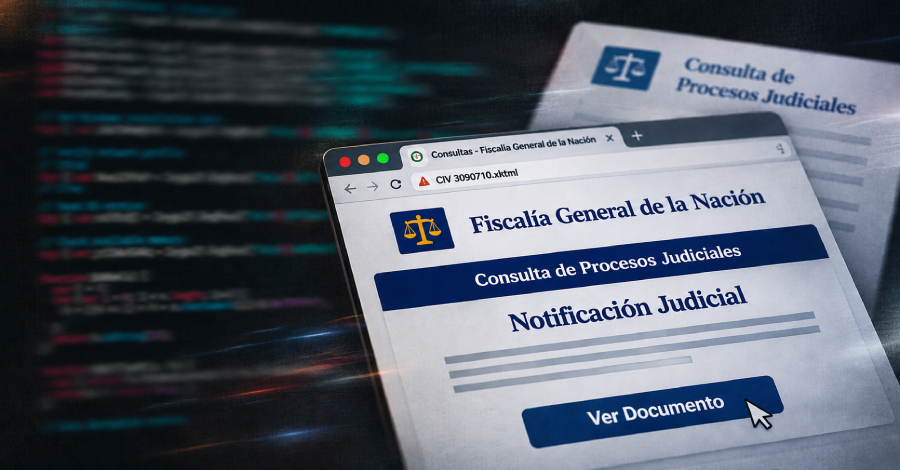
The threat actors of Blind Eagle have launched a new campaign targeting organizations in Latin America using fake court documents.
The cyber threat group known as Blind Eagle has recently launched a new campaign targeting organizations in Latin America. This campaign uses fake judicial and administrative documents to spread a Remote Access Trojan (RAT). The phishing methods employed are designed to deceive unsuspecting users into downloading malicious software.
The attacks occur through the sending of emails that appear to be official communications from courts or other authorities. These emails often contain fake notifications about court proceedings, tax notifications, or other legal matters that are significant in the respective countries. The threat actors use both Portuguese and Spanish to effectively reach their target audiences.
Technical Details of the Malware
The Remote Access Trojan used in this campaign has connections to known malware families such as AsyncRAT and DCRat. This type of malware allows attackers to take control of the affected systems and steal sensitive data. The malware can also be used for further attacks on networks and systems within the organizations.
The use of fake court documents is a proven method to gain the trust of victims. The attackers exploit the fear of legal consequences to persuade recipients to open the attached files or click on links that lead to harmful downloads. This tactic has proven particularly effective, as many people in Latin America hold legal institutions in high regard.
The campaign by Blind Eagle is not the first of its kind, but it demonstrates an increasing sophistication in the attackers' approach. The use of localized content and specific legal terms significantly enhances the credibility of the phishing attempts. Security researchers warn that such attacks may increase in the region as threat actors continue to refine their techniques.
Reactions and Security Measures
IT security experts advise organizations in Latin America to remain particularly vigilant and educate their employees about the dangers of phishing attacks. Raising awareness of such threats is crucial to reducing the likelihood that employees will fall for fake emails. Companies should also ensure that their systems are equipped with up-to-date security solutions to fend off potential attacks.
Authorities in several Latin American countries have already begun informing the public about this type of cyber attack. Campaigns are being launched to raise awareness of the dangers of phishing and malware. Collaboration between authorities and the private sector is seen as crucial to improving the cybersecurity landscape in the region.
The threat posed by Blind Eagle and similar groups remains a serious issue for cybersecurity in Latin America. The combination of localized attacks and the use of legal themes makes it difficult for many organizations to protect themselves. Ongoing developments in cybercrime require constant attention and adaptation of security strategies.
Ähnliche Artikel

Railway hack causes $740,000 fraud damage
A security incident at Railway led to $740,000 in fraudulent AI usage fees after hackers exploited vulnerabilities....

Apple fixes iMessage security vulnerabilities
Apple has released security updates to fix iMessage bugs that could compromise the privacy of group chats....

SEGA data breach affects 2.2 million email addresses
A data breach at SEGA's newsletter provider ARARA has exposed 2.2 million email addresses....

US imposes sanctions against MEXC crypto exchange
The US government has excluded the MEXC Global crypto exchange from the US financial system due to violations of sanctio...
comment Kommentare (0)
Noch keine Kommentare. Schreiben Sie den ersten!
Kommentar hinterlassen